
There is a moment, usually in late September, when the high-altitude air of the Tibetan Plateau shifts. The fierce, almost aggressive sunshine of summer softens into a warm, golden glow. The chaotic crowds of the peak tourist season have dissipated, leaving a profound silence that is only broken by the rustle of yellowing leaves and the distant chant of monks. This is autumn in Tibet—a season that many seasoned travelers argue is the region’s true masterpiece.
While spring brings the famous peach blossoms and summer offers the vibrant green of the pastures, autumn is when Tibet’s stark landscapes transform into a painter’s palette of gold, turquoise, and white. It is a time of harvest, both for the land and for the soul. If you are seeking a journey that combines comfortable weather, breathtaking scenery, and profound cultural immersion, a Tibet autumn tour is the ultimate bucket-list experience.
This guide will walk you through everything you need to know about visiting Tibet in the fall, covering the best routes, practical tips, and hidden gems that will make your journey unforgettable.
Why Autumn is the Best Time to Visit Tibet
Many argue that September and October are the best months to visit Tibet, and for good reason. The summer monsoon has retreated, taking with it the thick clouds and occasional rain. In their place, the skies return to their famous “Tibetan blue”—crisp, clear, and endless.
The Weather: Clear Skies and Comfortable Days
The climate during autumn, from late September to early November, is arguably the most comfortable for travel. Daytime temperatures in Lhasa and surrounding areas average a pleasant 10°C to 20°C (50°F to 68°F). This makes exploring the city’s monasteries and temples on foot a delight rather than a chore.
However, the Tibetan proverb “One day sees four seasons” holds. The nights remain cold, often dropping below freezing (to as low as -1°C), especially in the northern regions like Nagqu. This significant day-night temperature difference is the trade-off for the stunning autumn foliage and clear skies, so layering your clothing is essential.
The Scenery: A World of Three Colors
In the autumn, Tibet is dominated by a stunning “three-color” aesthetic.
- The Gold: The river valleys of Nyingchi and the parks of Lhasa explode with gold. Poplar and willow trees turn into shimmering towers of yellow and orange.
- The Blue: The lakes—such as the sacred Yamdrok Lake and Namtso—reflect the cloudless sky, making their turquoise and deep blue waters look almost artificial.
- The White: The first significant snowfalls of the season dust the peaks of the Himalayas and the Nyenchen Tanglha mountain range, creating a stark, beautiful contrast against the golden valleys.
The Golden Light: A Photographer’s Dream
Autumn brings a quality of light that is unmatched at any other time of year. The sun sits lower in the sky, casting long, dramatic shadows and bathing the landscape in a warm, honeyed glow. This “golden hour” effect lasts for much of the day, creating perfect conditions for landscape and portrait photography. The clarity of the air means that distant mountain peaks appear razor-sharp, and the colors of the prayer flags seem to vibrate against the deep blue sky.
The Cultural Tapestry of Autumn: Celebrating the Harvest
Autumn is not just a visual feast; it is a time of cultural significance for the Tibetan people. The harvest season is celebrated with some of the most important festivals, offering travelers a rare glimpse into the local traditions.
The Wangguo Festival
One of the most vibrant celebrations during this time is the Wangguo Festival, also known as the Ongkor Festival. Translating to “circumambulating the fields,” this festival is a 1,500-year-old tradition marking the end of the summer farming season and the approach of the harvest.
Typically occurring between July and September, depending on the lunar calendar and local crop ripening, the Wangguo Festival involves villagers dressing in their finest traditional attire and walking around the barley fields. They carry scriptures, thangkas, and “harvest towers” made of barley stalks to give thanks to the land and pray for a bountiful harvest. The celebration is also a massive social event, featuring horse racing, archery, Tibetan opera, singing, and dancing.
Witnessing the Wangguo Festival during your Tibet autumn tour provides an authentic, non-touristy look into the soul of rural Tibet—a community coming together in gratitude.
Other Autumn Traditions
Beyond the major festivals, autumn is a time when Tibetan families come together to harvest barley and wheat. You will see fields alive with activity as families work side by side, using traditional sickles and modern machinery alike. This is also the time when butter lamps are lit in greater numbers in monasteries, as families offer thanks for the harvest and pray for the coming winter.
Top Destinations for Your Tibet Autumn Tour
To truly appreciate the golden silence of Tibet, you need to venture beyond the capital. Here is a curated list of the best places to visit in the fall.
1. Lhasa: The Golden Heart
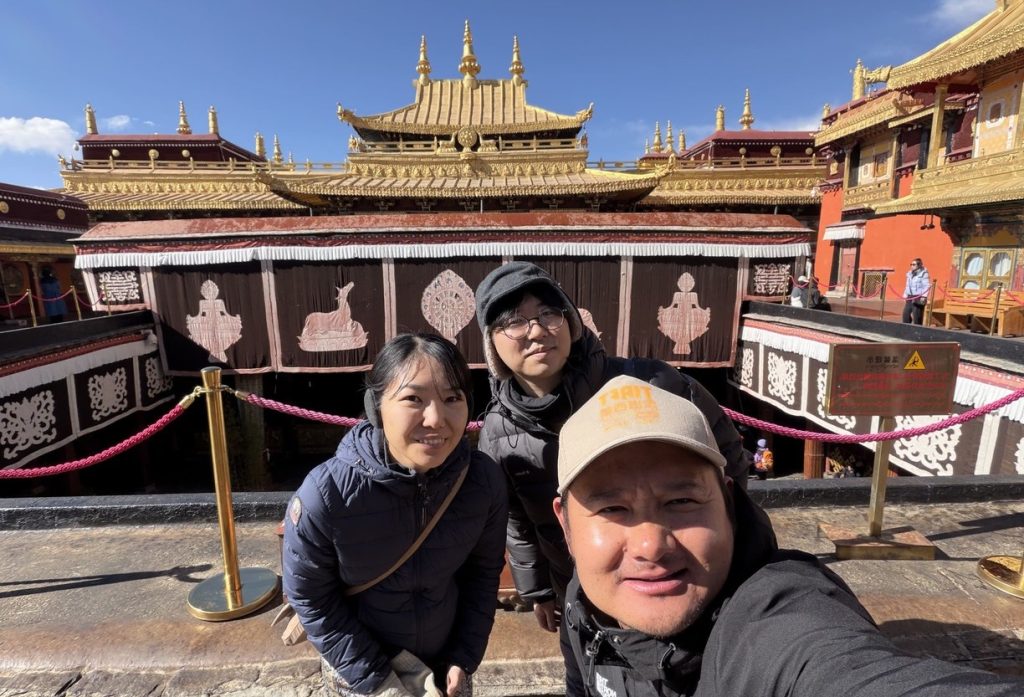
Start your journey in the capital, Lhasa, at an altitude of 3,650 meters. Take it easy to acclimatize. Visit the sacred Jokhang Temple and the bustling Barkhor Street to watch pilgrims spin prayer wheels and prostrate themselves in devotion.
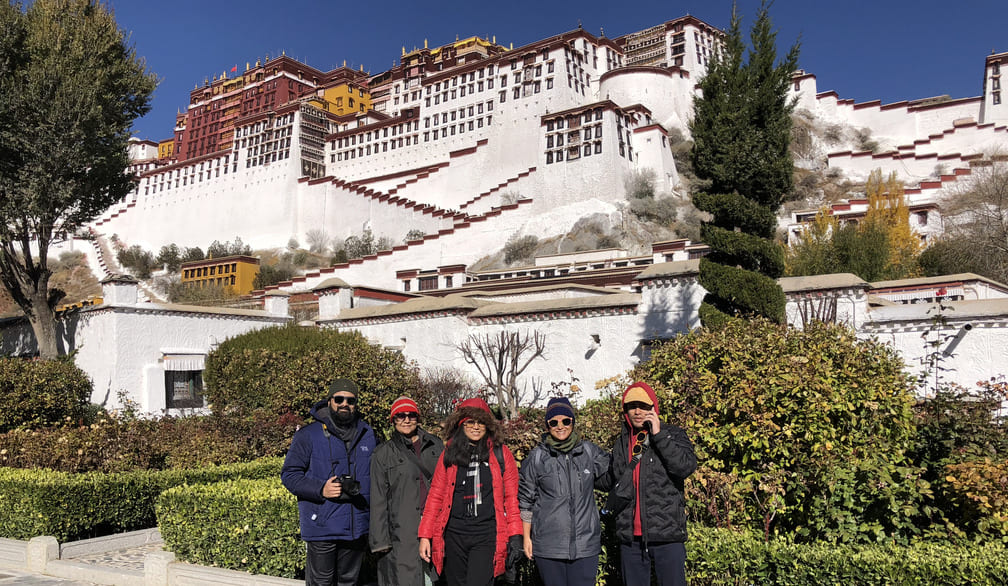
For a taste of autumn, head to the Potala Palace and walk around the base. The contrast of the white and red palace against the golden leaves of the surrounding parks is iconic. For a more intimate experience, visit Norbulingka, the Dalai Lama’s summer palace. It turns into a photographer’s paradise in October, with golden-leafed tree-lined paths and peaceful palace pavilions. The golden poplar tree-lined path is a must-shoot for any visitor; wearing dark blue or red clothes matches perfectly with the golden leaves.
Local Experiences in Lhasa:
- Join pilgrims in walking the kora (circumambulation path) around the Jokhang Temple at sunset.
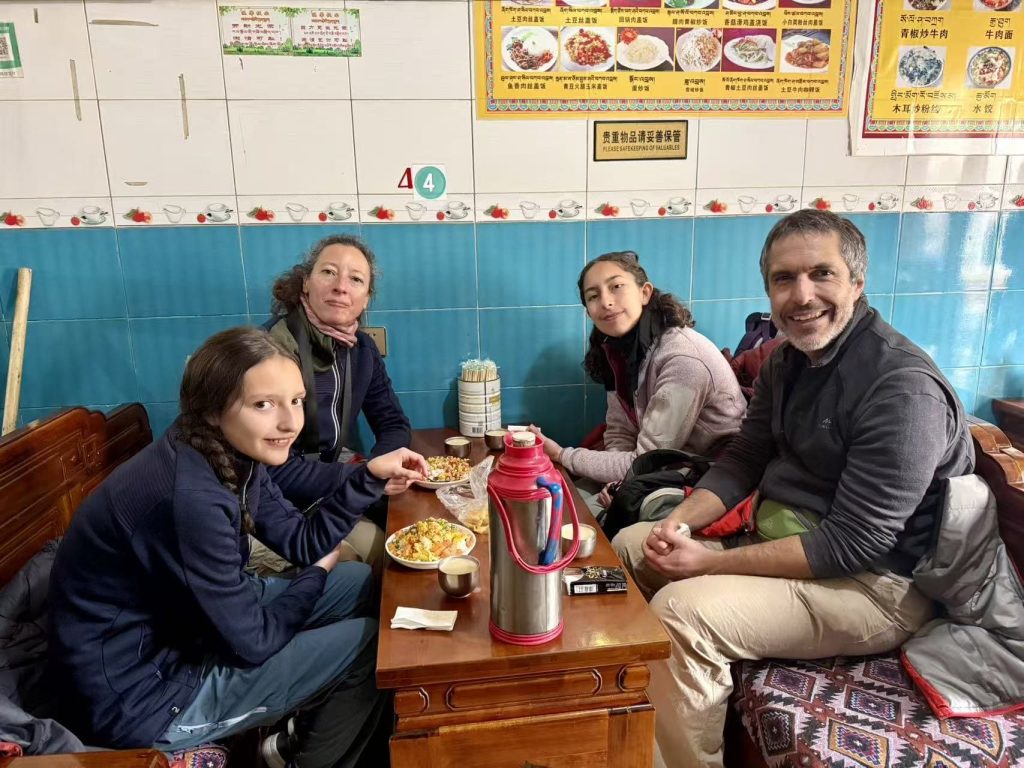
- Sip sweet tea at a local teahouse and watch the world go by.
- Visit the Sera Monastery in the late afternoon to witness the famous monk debates, which take on a special intensity in the crisp autumn air.
2. Nyingchi: The Switzerland of the East
If there is one place that steals the show in autumn, it is Nyingchi. Often called the “Jiangnan of Tibet” for its lower altitude and lush vegetation, Nyingchi is the undisputed king of autumn color. The best time for the autumn colors here is from September 25 to October 20, with some valleys showing peak colors until mid-November.
Key Highlights in Nyingchi:
- Niyang River Valley: A 300-kilometer stretch where National Highway 318 runs parallel to the river. The poplars and willows along the banks paint the valley in shades of yellow, orange, and red. This is less a destination and more a journey where the “road is the scenery.” Every bend in the river reveals a new vista more beautiful than the last.
- Basong Tso: Tibet’s first natural scenic 5A attraction, known as the “Little Switzerland of Tibet.” At an altitude of 3,480 meters, it is one of the lowest large lakes in Tibet, making altitude sickness less of a concern. The deep blue lake, surrounded by golden forests and the snow-capped peaks of the Nyenchen Tanglha range, is breathtaking. The Dachela Viewing Platform offers a panoramic view that will leave you in awe. You can also take a boat ride across the lake to explore smaller islands and hidden coves.
- The Yarlung Tsangpo Grand Canyon: Stay in the village of Suosong Village and wake up at dawn to see the golden sunlight hit the summit of Namcha Barwa, one of the world’s most spectacular unclimbed peaks. The canyon, the deepest in the world, is shrouded in mist and mystery, and autumn offers the clearest views.
- Lulang Forest: This beautiful forested area on the way to Nyingchi is often compared to the Alps. In autumn, the larch and fir trees turn golden and orange, creating a fairy-tale landscape. The Lulang International Tourism Town offers comfortable accommodation and spectacular views.
3. The Holy Lakes: Yamdrok and Namtso
To the south of Lhasa lies Yamdrok Lake. The drive over the Gampala Pass reveals a startlingly blue snake of water winding between the mountains. In autumn, the surrounding grasslands turn a soft gold, contrasting with the deep indigo of the water. Karola Glacier also comes alive in the fall; its whiteness starkly contrasts the golden hues of the surrounding area. The lake is considered sacred and is believed to be the soul of the Tibetan people. Walking along its shores in the peace of autumn is a meditative experience.
To the north, Namtso Lake is another must-see. While the nights are freezing, the days offer spectacular views of the sacred lake with the snow-dusted Nyenchen Tanglha mountains as a backdrop. The golden meadows around the lake are perfect for capturing majestic landscape photos. Namtso is one of the highest saltwater lakes in the world, and its vast, shimmering surface seems to stretch to the horizon.
4. Mount Everest Base Camp: A Chilly Challenge
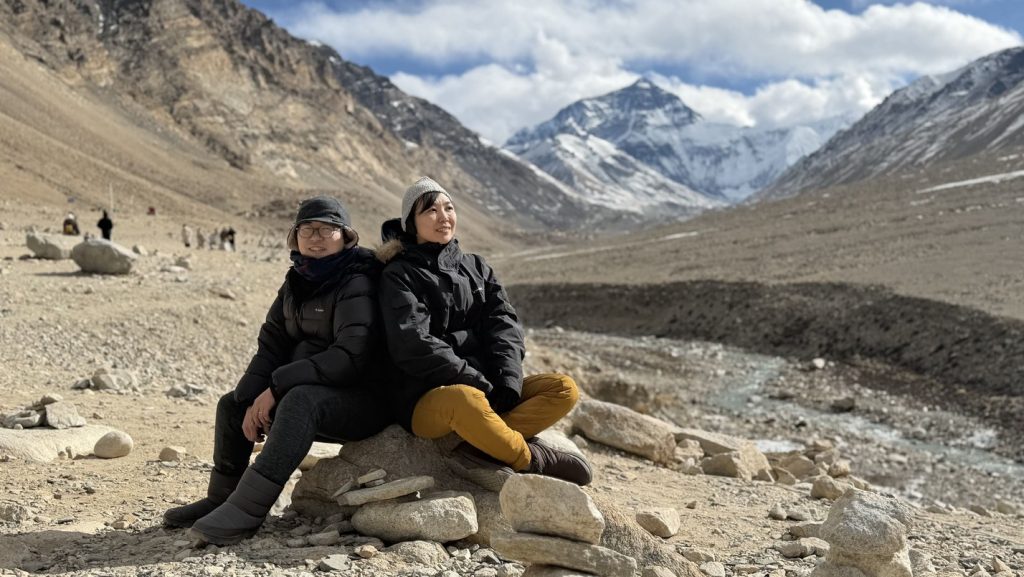
For the adventurous traveler, autumn offers some of the clearest views of Mount Everest. The monsoon clouds have cleared, and the air is so crisp that the world’s highest peak appears almost close enough to touch. While temperatures at Everest Base Camp drop well below freezing at night, the daytime views are unparalleled. The journey to the base camp takes you through stunning passes like the Gyawu La Pass, where you can see five of the world’s highest peaks in one panoramic view.
The “How-To”: Essential Travel Tips and Itineraries
To make the most of your Tibet autumn tour, planning is key. Here are detailed itineraries, packing advice, and practical information to ensure your journey goes smoothly.
Itinerary: A 7-Day Autumn Journey
Day 1-2: Lhasa Acclimatization
- Arrive in Lhasa. Rest to acclimatize. Drink plenty of water and avoid strenuous activity.
- Visit the Potala Palace and Jokhang Temple. Walk around Barkhor Street to soak in the atmosphere. Consider visiting the Tibet Museum to understand the region’s history and culture.
Day 3: Lhasa to Nyingchi (Drive)
- Take the scenic 318 National Highway to Nyingchi, a journey of about 5 hours. Enjoy the autumn colors starting to appear along the Niyang River.
- Stop at the Midui Glacier, one of the most accessible glaciers in Tibet, for a breathtaking view of ice and golden forests.
- Overnight in Nyingchi city.
Day 4: Basong Tso Full Day
- Drive to Basong Tso, about 2 hours from Nyingchi.
- Explore the lake by boat, visit Cuozong Monastery on the lake island, and hike the Xincuo trail for more intimate scenery.
- Overnight in Jieba Village, a traditional Tibetan village inside the scenic area. Experience a homestay to learn about local life.
Day 5: Nyingchi to Lhasa
- Return to Lhasa. In the afternoon, visit Norbulingka to see the golden poplar trees.
- Explore the local markets in Lhasa for handicrafts and souvenirs.
Day 6: Yamdrok Lake Day Trip
- Drive to Yamdrok Lake. Capture the intense blue of the lake against the autumn gold. Visit the Karola Glacier nearby.
- Return to Lhasa in the evening.
Day 7: Departure
- Fly or take the train out of Lhasa. If time allows, visit one last monastery or teahouse before leaving.
Alternative Itinerary: The Everest Route
For those with more time and a spirit of adventure, consider extending your tour to include Mount Everest.
- Days 1-3: Lhasa acclimatization and sightseeing.
- Days 4-5: Drive to Shigatse, visiting Yamdrok Lake and the Gyantse Kumbum on the way. Overnight in Shigatse.
- Day 6: Drive to Everest Base Camp. Stay overnight in the guesthouses at Rongbuk.
- Day 7: Watch the sunrise over Everest and return to Shigatse.
- Day 8: Return to Lhasa.
Practical Tips for Your Tibet Autumn Tour
Packing Essentials
Layered Clothing: Dress in three layers: a base layer like thermal underwear, a middle layer like a fleece or wool sweater, and an outer shell like a windbreaker or light down jacket. This will help you manage the significant temperature swings between sunny afternoons and cold evenings.
Footwear: Sturdy, comfortable walking shoes or hiking boots are essential. You will be doing a lot of walking on uneven surfaces, cobblestones, and dirt paths.
Accessories: Bring a warm hat, gloves, and a scarf for the cold mornings and evenings. Sunscreen and sunglasses are non-negotiable due to the intense high-altitude sun. The UV radiation is strong even on cloudy days.
Health and Medicine: Bring a first-aid kit with basics like painkillers, antiseptic, and bandages. Include medicine for altitude sickness, such as Diamox, and consult your doctor before traveling. Stay hydrated and avoid alcohol during the first few days of your trip.
Photography Gear
The autumn light is beautiful but intense. Use the “golden hours” of 9-11 AM and 4-6 PM for the best shots. A polarizing filter is highly recommended to reduce glare and enhance the blue of the lakes and skies. If you plan to visit Basong Tso, a wide-angle lens is great for panoramas, while a telephoto is better for capturing details. Drones require special permissions and are often restricted near monasteries and sacred sites, so check local regulations carefully.
Permits and Logistics
You cannot travel independently in Tibet. You must book through a registered travel agency to obtain the necessary Tibet Travel Permit. If you plan to visit border regions like Mount Everest or areas in Nyingchi near the border, you will need an additional border permit, known as the Alien Travel Permit. Your travel agency will handle all of these arrangements, so ensure you book with a reputable company well in advance.
Altitude Sickness Management
Take it slow. Stay hydrated, avoid alcohol, and allow time to acclimatize in Lhasa before going higher. The risk of altitude sickness is lower in the valleys of Nyingchi, making it an ideal starting point for some travelers. Many choose to fly into Nyingchi Milin Airport, which is at a lower altitude of 2,949 meters, and then take the train to Lhasa to gradually ascend.
Currency and Connectivity
The Chinese Yuan is the currency used throughout Tibet. Credit cards are not widely accepted outside of major hotels, so carry enough cash for your daily expenses. ATMs are available in Lhasa and other major towns. Internet and mobile coverage are available in Lhasa and Nyingchi, but services are limited in remote areas. Consider purchasing a local SIM card for data, but be aware that certain websites and apps are restricted in China.
Respecting Local Culture
Tibet is a deeply religious region. Show respect at all times:
- Always walk clockwise around monasteries, stupas, and mani stones.
- Never touch a monk’s head or shoulder.
- Ask permission before taking photos of people, especially monks and pilgrims.
- Do not point your finger at statues, altars, or religious objects; instead, gesture with an open palm.
- Remove your hat and sunglasses when entering a monastery or temple.
The Hidden Gems of Autumn
Beyond the well-trodden paths, autumn in Tibet reveals hidden wonders that few travelers experience.
The Peach Blossom Villages of Nyingchi
While Nyingchi is famous for its peach blossoms in spring, the same villages—like Gala Village and Doxiong Village—take on a different beauty in autumn. The peach trees turn shades of deep red and orange, and the fields are golden with ripe barley. These villages are quiet, peaceful, and offer an intimate view of Tibetan rural life.
The Salt Fields of Markam
Further east, near the border with Sichuan, lies Markam County, famous for its ancient salt fields. In autumn, the contrast between the white salt terraces, the golden mountains, and the clear blue sky is stunning. It is a long journey, but for those seeking the road less traveled, it is well worth it.
The Hot Springs of Yangbajain
Just a few hours from Lhasa, the Yangbajain hot springs offer a relaxing respite from the cold autumn air. Surrounded by snow-dusted mountains, soaking in the hot springs while watching the sunset is a perfect way to end a day of exploration.
Reflections on the Journey
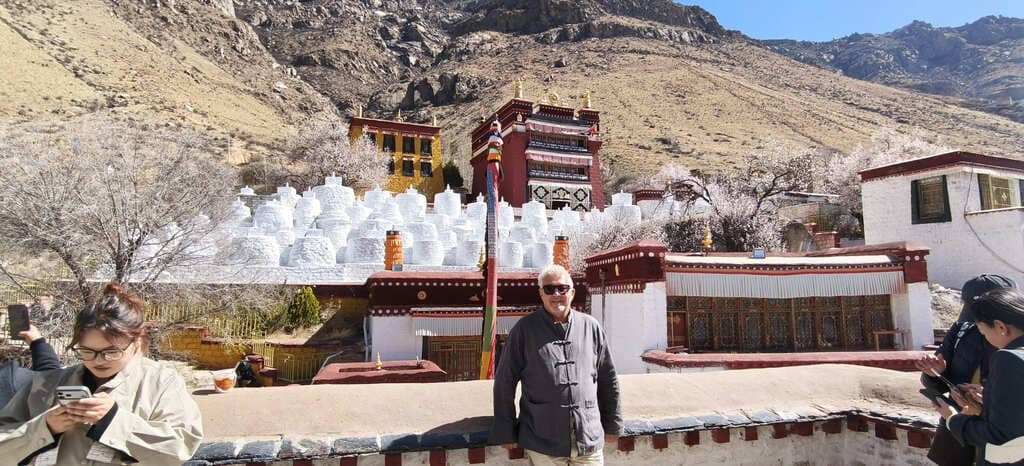
A Tibet autumn tour is more than just a vacation; it is a pilgrimage into a world of vivid colors and profound silence. The crowds of summer have vanished, leaving you with the whispers of the wind through golden willows and the gentle hum of prayer wheels.
Traveling through this land forces you to slow down. The altitude, the scenery, and the culture all combine to create a space for reflection. As you stand at the shores of Basong Tso, hike the golden trails of the Niyang River Valley, or watch the sunset over the Potala Palace, you feel the weight of the ordinary world lift from your shoulders.
The Tibetan people, with their warmth and resilience, add another layer of depth to the journey. Their festivals, their daily rituals, and their connection to the land are not tourist attractions but living traditions. By visiting in autumn, you are not just a spectator but a participant in their celebration of harvest and gratitude.
The golden season is fleeting, lasting only a few precious weeks each year. The leaves will fall, the snow will cover the valleys, and the winter silence will take over. But for those few weeks, Tibet is bathed in a light that seems to come from another world. The colors are deeper, the skies are clearer, and the silence is more profound.
Conclusion
Whether you are a photographer chasing the perfect light, a spiritual seeker drawn to the sacred landscapes, or simply a traveler looking for a journey that will transform you, autumn in Tibet delivers on every level. The weather is perfect, the views are unparalleled, and the culture is rich with meaning.
As you leave, you carry with you more than just photographs. You carry the memory of the golden light on the mountains, the sound of the prayer flags in the wind, and the warmth of the Tibetan people. It is a memory that will stay with you long after the leaves have fallen and the snow has melted.
Don’t wait. This golden season comes but once a year, and it is gone in the blink of an eye. If you want to see the Roof of the World at its absolute best, plan your journey for September or October. You won’t regret it. The golden silence of Tibet is calling.