
There’s a moment in late March when Tibet transforms. The harsh winter winds soften, the frozen lakes begin to crack with melodic pops, and across the valleys of the southeast, millions of wild peach blossoms erupt in shades of pink and white against a backdrop of snow-covered peaks. This is spring on the Roof of the World—a season so spectacular that it draws travelers from across the globe to witness one of Earth’s most extraordinary natural phenomena.

A Tibet spring tour offers something that no other season can match: the juxtaposition of winter’s lingering majesty and spring’s vibrant rebirth. Here, at the intersection of the Himalayas and the Tibetan Plateau, you’ll find landscapes that seem almost supernatural—glaciers calving into turquoise lakes while peach petals drift on the breeze, ancient monasteries emerging from winter isolation, and the clearest skies of the year revealing Everest in all its glory.
This comprehensive guide will walk you through everything you need to know about visiting Tibet in spring 2026—from the world-famous Nyingchi Peach Blossom Festival to the hidden blue ice wonders of Yamdrok Lake, from practical packing advice to cultural insights that will transform your journey from mere sightseeing to genuine immersion.
Why Spring is Tibet’s Most Magical Season
The Perfect Balance of Weather and Wonder
Spring in Tibet (March through May) occupies a sweet spot in the plateau’s extreme climate. Unlike the frigid winter when temperatures plunge to -20°C at night, or the summer monsoon when clouds often obscure mountain views, spring offers the best of both worlds: comfortable daytime temperatures and exceptional visibility.
During March and April, daytime temperatures in Lhasa and Nyingchi range from 10°C to 18°C (50-65°F), perfect for exploration without the intense heat of summer. Nights remain chilly, dropping to around 0°C, but this temperature swing creates magical conditions—morning frost sparkling on prayer flags, afternoon sun warming ancient stones, and evenings perfect for stargazing with minimal atmospheric distortion.
What truly sets spring apart, however, is the clarity of the air. The winter winds have swept away particulate matter, and the summer rains haven’t yet arrived to create haze. This means your chances of seeing Mount Everest’s summit, Namcha Barwa’s elusive peak, and the crystalline waters of Yamdrok Lake are significantly higher than in any other season.
The Phenomenon of “Two Seasons in One Frame”
Perhaps spring’s greatest gift is the visual contradiction it presents: winter and summer coexisting in perfect harmony. You’ll photograph snow-covered mountains reflected in lakes just beginning to thaw, while in the foreground, wild peach blossoms burst with life. Nomads begin moving their yaks to higher pastures, passing through valleys where last week’s snow still lingers in shaded hollows.
This “two seasons in one frame” phenomenon creates photography opportunities that simply don’t exist at any other time of year. Professional photographers flock to Tibet in spring not despite the unpredictable weather, but because of it—the drama of storm clouds parting to reveal sunlit peaks, the soft light filtered through thin cloud cover, the way snow dusts blooming peach trees like nature’s own confectionery.

The Crown Jewel—Nyingchi Peach Blossom Festival 2026
Understanding the “Snowy Region South of the Clouds”
If you know only one thing about spring in Tibet, it should be this: from late March to mid-April, the region of Nyingchi (Linzhi) becomes the most beautiful place on Earth. Known as the “Snowy Region South of the Clouds”, this southeastern corner of Tibet defies every stereotype about the plateau. Here, at altitudes averaging just 2,800-3,000 meters, the air is richer in oxygen, the valleys are carpeted in green, and the mountains are blanketed in forests rather than bare rock.
The reason for this botanical abundance is simple geography. The Yarlung Tsangpo River, carving through the deepest canyon on Earth, channels warm, moist air from the Indian Ocean northward into Tibet. This microclimate creates conditions where wild peach trees—not planted by human hands but growing naturally for centuries—thrive in astonishing numbers. Unlike cultivated orchards, these ancient trees have grown wild, their gnarled branches spreading in irregular patterns that photographers dream of capturing.
2026 Blooming Forecast and Peak Dates
For 2026, all indicators point to a spectacular blooming season. Based on current weather patterns and historical data, here’s what you need to know:
· Blooming period: Late March to mid-April (approximately 20-25 days total)
· Peak bloom: March 30 to April 5, 2026—this is when the flowers reach maximum coverage
· Early bloomers: Lower elevation valleys around Bomi may show color as early as March 20
· Late bloomers: Higher elevation areas like the passes may hold flowers into April 15
Crucial note: Blooming periods are heavily influenced by the weather in the weeks preceding. A warm spell can accelerate blooming; a cold snap can delay it. Your best strategy is to book a flexible itinerary and follow real-time flower updates from your tour operator or local sources. The 2026 season is expected to be particularly vibrant due to adequate winter moisture and stable spring temperatures.
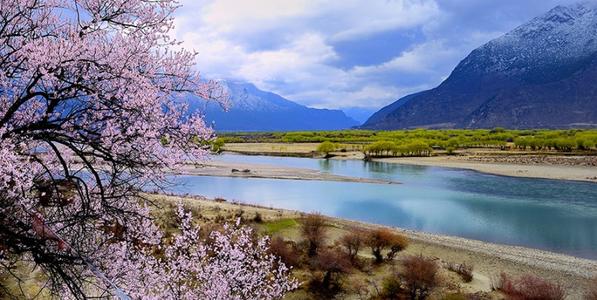
The Main Venues: A Traveler’s Guide to Nyingchi’s Peach Blossoms
Gala Peach Blossom Village
Just 10 kilometers from Nyingchi’s main urban area, Gala Village serves as the official main venue for the Nyingchi Peach Blossom Festival. Surrounded by mountains on three sides, with the Niyang River flowing quietly nearby, this village has earned its reputation as the “first village of peach blossoms in Tibet.” Within its 278 acres, over 1,250 wild peach trees—many over 100 years old—create a pink wonderland each spring.
What makes it special: Since 2002, Gala has hosted the official Peach Blossom Festival opening ceremonies, complete with cultural performances, local food stalls, and organized activities. If you want the festival experience—Tibetan dancing, traditional music, and the energy of crowds celebrating spring—this is your place.
Entry fee: 60 RMB (includes sightseeing bus)
Best time: Early morning (7-9 AM) for soft light and fewer crowds, or late afternoon for golden hour photography
Bomi Peach Blossom Valley
For those seeking scale and wild beauty, Bomi Peach Blossom Valley delivers beyond imagination. Stretching nearly 60 kilometers along the Palong Zangbo River, this valley contains over 200,000 wild peach trees scattered across nine villages. The average tree age is approximately 360 years, with some specimens reaching 14 meters in height and widths requiring multiple people to encircle.
What makes it special: Unlike Gala’s organized festival atmosphere, Bomi feels untouched, natural, and profoundly peaceful. The peach trees here grow with complete abandon—clinging to steep hillsides, lining riverbanks, surrounding ancient villages. The valley is also known as “Glacier County,” with over 2,000 glaciers visible from various points, creating the world-class spectacle of peach blossoms blooming at the feet of massive ice formations.
Key villages within the valley:
· Garang Village: Claims the earliest-blooming peaches in Tibet, plus Garang Lake and the ruins of Garang King’s Palace for dramatic photography
· Runa Village: Dense peach forests with excellent mountain backdrops
· Qingduo Town: Higher elevation, later bloom, and panoramic valley views
Access: Free entry; located about 17 kilometers west of Bomi county town along Highway 318
Suosong Village
Perched on a cliff overlooking the Yarlung Tsangpo River, Suosong Village offers perhaps the single most photographed view in all of Tibet: Namcha Barwa Peak (7,782 meters) framed by flowering peach trees with the river winding through the valley below. This is the postcard image that launched a thousand trips to Tibet.
What makes it special: The combination of elements—the “Shy Maiden Peak” (as Namcha Barwa is known for its cloud-veiled summit), the turquoise river, the pink blossoms, and the traditional village—creates compositions that seem almost too perfect to be real. During peak bloom, the village becomes a photographer’s paradise, with viewpoints around every corner.
Accommodation: Homestays within the village offer the ultimate experience—waking to sunrise painting Namcha Barwa gold, spending golden hour shooting without traveling anywhere, and falling asleep under star-filled skies. Book at least 1-2 months in advance; rooms during festival season can reach 2,000+ RMB per night and sell out quickly.
Entry: Village entry is free, but homestay prices surge during peak season. Many group tours include one night here—often the most cost-effective way to secure this experience.
Along the Niyang River (尼洋河)
The Niyang River, flowing from its source in the mountains through broad valleys before joining the Yarlung Tsangpo, offers a different perspective on peach blossom viewing. Here, the blossoms line the riverbanks, reflecting in calm waters, with blue skies above and green fields beyond.
What makes it special: This is pastoral Tibet at its finest—farmers plowing fields with yaks, children playing beneath flowering trees, women washing clothes in the river while petals drift past. The combination of water, blossoms, and daily life creates authentic scenes that feel miles away from any tourist crowds.
Best viewing: The stretch between Nyingchi town and the Yarlung Tsangpo confluence, accessible via the Lin-La Expressway
Photography Tips for Peak Bloom
To capture Nyingchi’s peach blossoms at their best, follow these professional recommendations:
Gear essentials:
· Telephoto lens (70-200mm or longer): Essential for compressing snow mountains and blossoms into single frames
· Drone: For sweeping valley shots showing the scale of bloom coverage (check no-fly zones near monasteries and military areas)
· Tripod: For golden hour time-lapses and low-light shooting
Magic hours:
· 7:00-9:00 AM: Mist rising from valleys, soft light, Namcha Barwa often visible before clouds form
· 5:00-7:00 PM: Golden light warming blossoms, long shadows adding depth, mountains catching alpenglow
Composition techniques:
· Frame snow peaks through flowering branches for depth
· Shoot low-angle upward shots with a blue sky background
· Include Tibetan elements (prayer flags, monks, village architecture) for cultural context
· Find reflections in still water or wet pavement after rain
What to wear for photos:
· Light colors (white, pink, pale blue) complement blossoms
· Tibetan costume rentals available at many villages (50-300 RMB/day)
· Avoid dark colors that absorb heat and contrast poorly with pink flowers
· Wide-brimmed hats add elegance while providing essential sun protection
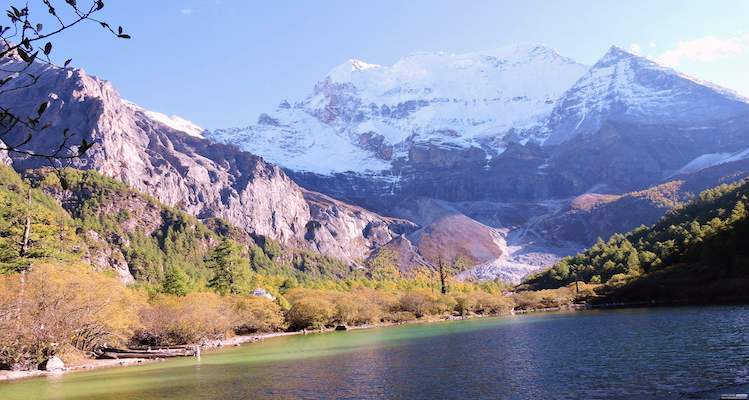
Beyond the Blossoms—Spring’s Other Treasures
Yamdrok Lake’s Blue Ice Wonder
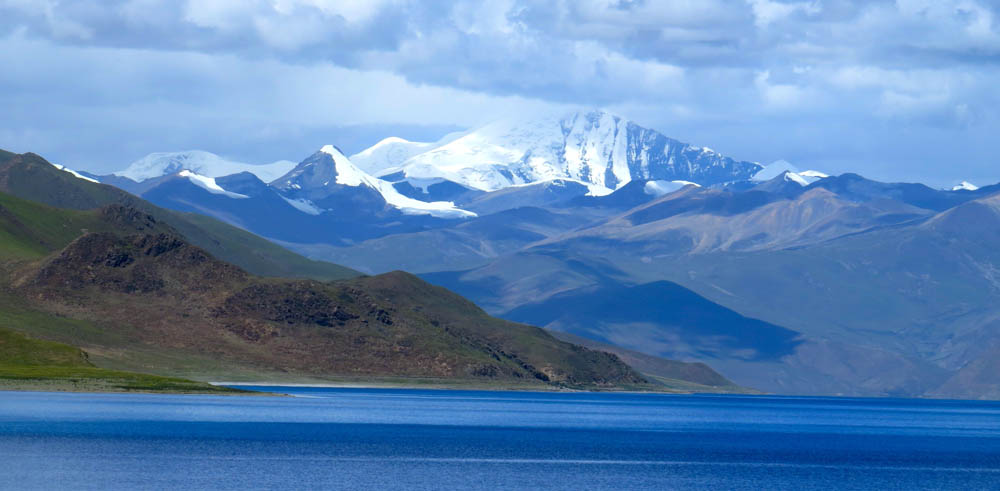
While Nyingchi claims the peach blossoms, Yamdrok Lake offers a phenomenon equally spectacular and far more ephemeral: the blue ice. Through early April, this sacred lake—one of Tibet’s three holiest—retains patches of winter ice that glow an ethereal turquoise blue in the spring sunlight.
What creates the blue? As ice forms slowly over winter, air bubbles are forced out, allowing the ice to absorb red light and scatter blue—the same physics that makes glacial ice so vividly colored. By April, the ice has begun to crack and melt, creating fissures and standing shards that catch the light like scattered gemstones.
Best viewing locations:
· The lakeshore near the main overlook (accessible via paved road)
· Pumoyongcuo (a smaller adjacent lake) with its dramatic blue ice walls
· Inlets along the lake’s western shore, reachable with a local guide
Timing: Early to mid-April offers the best combination of accessible ice and comfortable temperatures. By late April, most of the ice has melted, revealing the lake’s famous turquoise waters.
Everest in the Clear Season
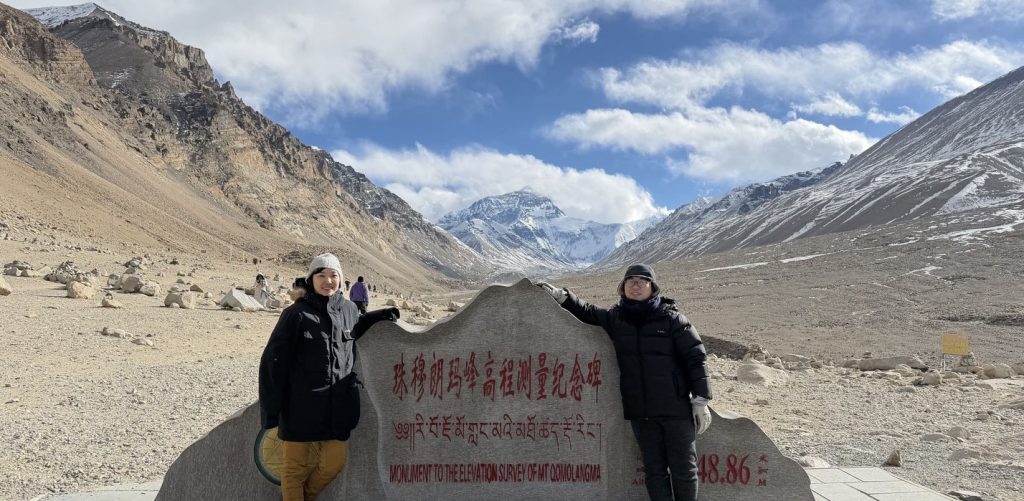
April marks the transition to Everest’s “clear season”—weeks when the jet stream shifts and the mountain’s summit is more often visible than hidden. While summer brings clouds and winter brings extreme cold, April offers the perfect balance: moderate temperatures at base camp (daytime around 5°C) and exceptional visibility.
What you’ll see:
· Everest’s north face in its full glory, unobstructed by clouds
· The entire Himalayan chain from Gyachung Kang to Lhotse
· Five major peaks framed together at Gawula Pass
· The famous Rongbuk Monastery with Everest as its backdrop
The base camp experience: Unlike the Nepalese side, Tibet’s Everest Base Camp is accessible by vehicle—no trekking required. You’ll drive right to the flat expanse where climbers establish their advance base, with the mountain looming directly ahead. Overnight at the Rongbuk Monastery guesthouse or the newer oxygen-supplied tents for sunrise photography that justifies every layer of clothing you’ll wear.
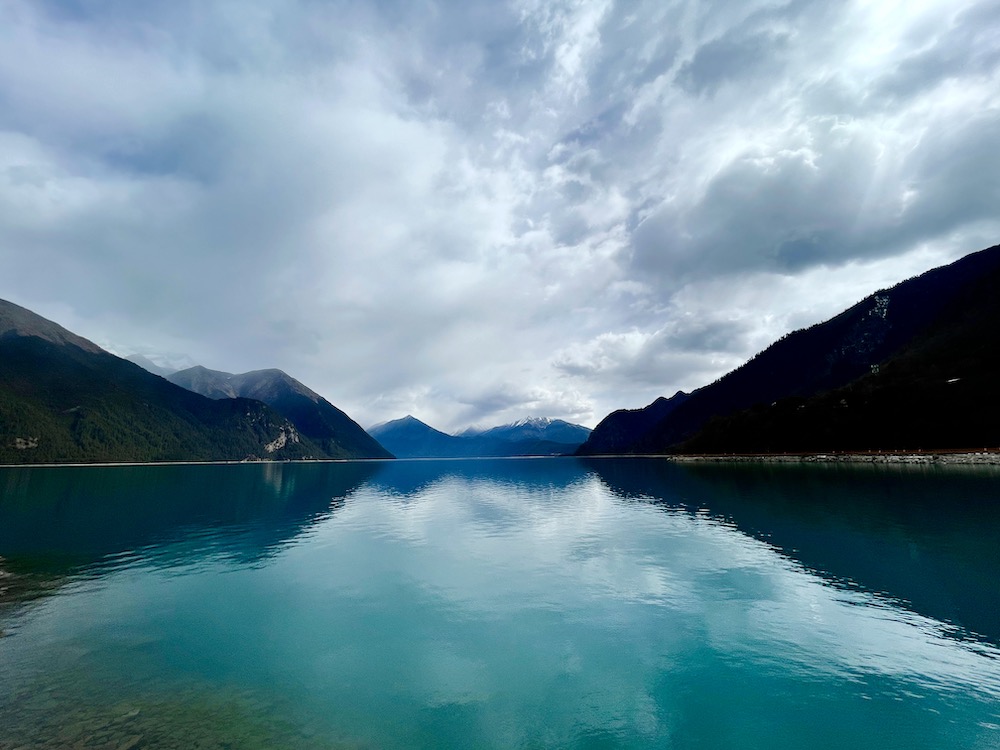
Basum Tso: Sacred Lake in Spring Awakening
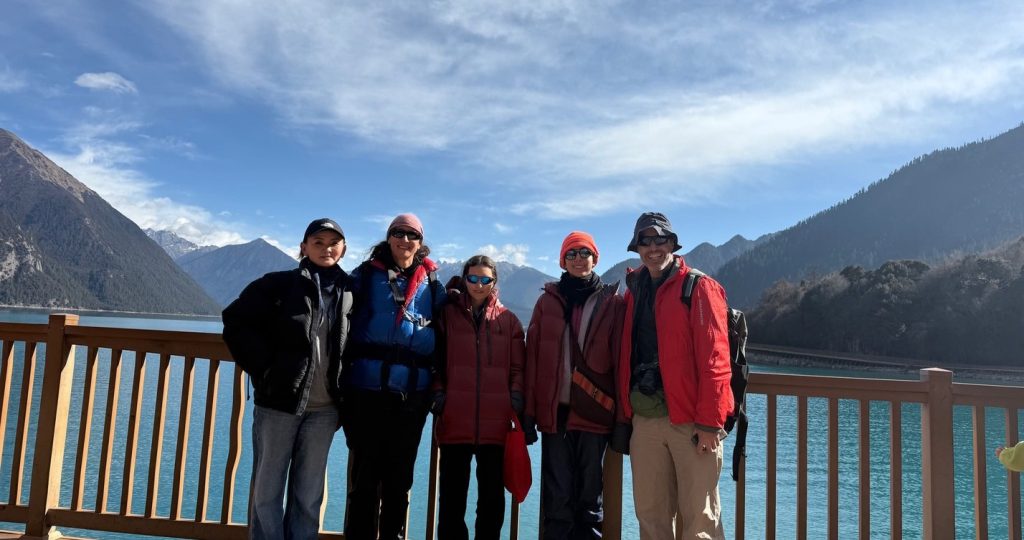
While Nyingchi’s peach blossoms claim the spotlight, Basum Tso (also called Basongcuo) offers a more tranquil spring experience. This alpine lake, surrounded by forested mountains and dotted with a small temple on an island, sits at 3,700 meters—high enough to retain winter’s magic but low enough for comfortable exploration.
Spring highlights:
· Snow-dusted forests reflecting in mirror-calm water
· Ice remnants along shaded shores
· The famous Tsogyal Tso temple is accessible by footbridge
· Far fewer tourists than Nyingchi’s main sites
Insider tip: Combine Basum Tso with a visit to the nearby Xuba Fortress, an ancient watchtower complex that offers panoramic valley views and a glimpse into Tibet’s military history.
Lhasa in Spring: Spiritual Renewal
Spring in Lhasa coincides with significant Buddhist observances, adding spiritual depth to your visit. The city emerges from winter’s quiet with renewed energy—pilgrims resume full circuits of the Lingkhor, monks prepare for upcoming festivals, and the air carries a sense of anticipation.
Must-do spring experiences in Lhasa:
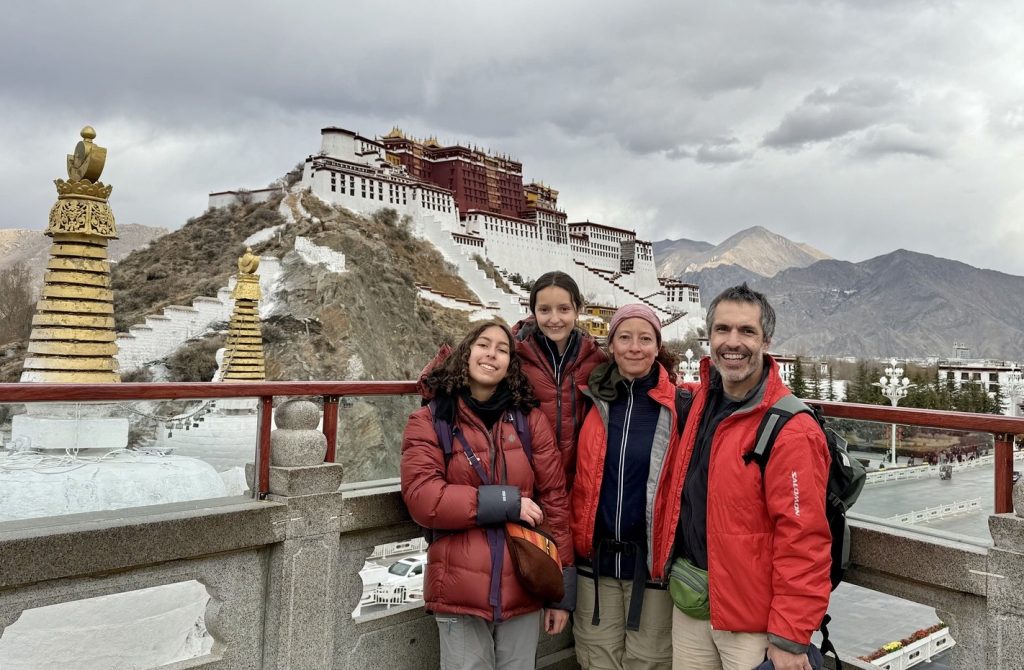
· Potala Palace at dawn: The crowds of summer haven’t arrived; you’ll share the experience primarily with pilgrims
· Barkhor kora: Join the circuit around Jokhang Temple, spinning prayer wheels with locals starting their day
· Sweet tea houses: Spend an afternoon at Guangming or another traditional teahouse, watching Lhasa life unfold
· Sera Monastery debates: The monks’ afternoon philosophical debates continue year-round, offering insight into Tibetan Buddhist education
Spring exclusive: Some Lhasa hotels offer “Potala afternoon tea” packages—an elegant way to absorb the palace’s majesty while warming yourself after chilly mornings.
Spring Itineraries for Every Traveler
The 7-Day Peach Blossom Classic
Perfect for travelers focused primarily on Nyingchi’s blooms, this itinerary maximizes flower-viewing time while ensuring proper acclimatization.
Day 1: Arrive in Nyingchi
· Fly into Nyingchi Milin Airport (direct flights from Chengdu, Chongqing, Xi’an)
· Transfer to hotel; rest and acclimatize (Nyingchi’s 2,800m altitude is ideal for initial adjustment)
· Evening stroll on “Gongbu Tianjie” for Tibetan noodles and sweet tea
· No shower or strenuous activity on arrival—let your body adjust
Day 2: Nyingchi introduction
· Morning: Gala Peach Blossom Village, festival main venue
· Afternoon: Sedhi La Pass (4,728m) for distant Namcha Barwa views
· Evening: Drive toward Bomi, overnight in Bomi County
Day 3: Bomi exploration
· Full day in Bomi Peach Blossom Valley
· Visit Garang Village, Garang Lake, and the ancient palace ruins
· Photograph the 30-kilometer wild peach corridor
· Overnight Bomi
Day 4: Return to Nyingchi via Lulang
· Morning: Drive back toward Nyingchi
· Stop at Lulang Forest viewing platform
· Lunch: Must-try Lulang stone pot chicken (matsutake mushrooms + native chicken)
· Afternoon: Check into Suosong Village homestay
· Sunset photography: Namcha Barwa + peach blossoms + Yarlung Tsangpo
Day 5: Suosong Village sunrise
· Pre-dawn: Position for “golden mountain” sunrise on Namcha Barwa
· Morning: Tibetan costume photography in peach forests
· Afternoon: Yarlung Tsangpo Grand Canyon exploration
· Evening: Second night in Suosong or return to Nyingchi town
Day 6: Basum Tso extension
· Drive to Basum Tso (2-3 hours)
· Lake circuit and temple visit
· Return to Nyingchi for the final night
Day 7: Departure
· Morning flight out from Nyingchi, or
· Optional overland transfer to Lhasa (4-5 hours) to continue your Tibet journey
The 10-Day Everest & Peach Blossom Combination
For travelers wanting both spring blossoms and Himalayan grandeur, this itinerary delivers the best of both worlds.
Days 1-5: Follow the 7-Day Classic itinerary through Day 5, but overnight in Nyingchi on Day 5 rather than Suosong
Day 6: Nyingchi to Lhasa
· Morning drive via Lin-La Expressway (4 hours)
· Afternoon: Rest and begin Lhasa exploration at your own pace
· Evening: Light acclimatization walk around Barkhor
· Overnight in Lhasa oxygen-supplied hotel
Day 7: Lhasa city tour
· Morning: Potala Palace (book tickets well in advance)
· Afternoon: Jokhang Temple and Barkhor kora
· Evening: Sweet tea house experience
· Special touch: Potala Palace afternoon tea (included in some tour packages)
Day 8: Lhasa to Shigatse via Yamdrok Lake
· Morning: Drive over the Kampala Pass to Yamdrok Lake
· Blue ice photography (early April only)
· Continue to Karola Glacier for close-up ice views
· Visit Palcho Monastery in Gyantse
· Arrive Shigatse, overnight
Day 9: Shigatse to Everest Base Camp
· Morning: Tashilhunpo Monastery visit
· Drive via Gawula Pass (five-peak view)
· Arrive at Rongbuk Monastery, Everest view
· Overnight at Everest Base Camp (basic but unforgettable)
Day 10: Return to Shigatse/Lhasa
· Sunrise at Everest if the weather permits
· Drive back to Shigatse, connect to Lhasa for departure
The Family-Friendly Bingchacha Route
Traveling with children requires special consideration. The Bingchacha route, available exclusively through guided tours in 2026, offers a low-altitude approach that minimizes altitude concerns.
Why it works for families:
· Gradual altitude gain from 1,000m to 3,000m over 7 days
· Less-traveled route avoiding crowds
· Child-friendly activities and hiking distances
· Cultural immersion in ethnic minority villages
Highlights:
· Nujiang River valley exploration
· Meili Snow Mountain backside views (uncrowded)
· Tibetan villages with opportunities for cultural exchange
· Ranwu Lake and Bomi Peach Blossom Valley
· Gentle glacier hikes are appropriate for children
Practical Spring Travel Essentials
Weather and Packing: The Complete Guide
Spring in Tibet means preparing for everything from warm sunshine to sudden snow flurries. The key is layering.
Temperature ranges by location (March-April) :
Location Daytime High Nighttime Low
Lhasa 10-15°C (50-59°F) 0-5°C (32-41°F)
Nyingchi 12-18°C (54-64°F) 2-8°C (36-46°F)
Shigatse 8-13°C (46-55°F) -2-3°C (28-37°F)
Everest Base Camp 0-5°C (32-41°F) -10 to -5°C (14-23°F)
The layering system :
1. Base layer: Quick-dry merino wool or synthetic. Avoid cotton—it stays wet against skin.
2. Insulating layer: Fleece or light down jacket for flexibility
3. Outer shell: Windproof and waterproof jacket. Spring winds can be fierce, and sudden snow isn’t uncommon.
4. Bottoms: Fleece-lined pants or leggings under windproof pants. Jeans alone won’t cut it at higher elevations.
5. Footwear: Waterproof hiking boots with good grip. Some spring trails remain muddy or icy.
6. Accessories:
· Warm hat (beanie) that covers ears
· Sun hat with wide brim
· Sunglasses (dark lenses essential for snow fields)
· Gloves (lightweight for daytime, insulated for evening)
· Scarf or neck gaiter
· Multiple pairs of wool socks
Special spring considerations:
· Sunscreen: SPF 50+, reapply every 2 hours. UV at altitude is extreme even on cloudy days.
· Lip balm with SPF: Prevents painful cracking
· Moisturizer: The dry air will dehydrate skin
· Hand sanitizer: Facilities can be basic
· Reusable water bottle: Hydration is crucial; bring a thermos for hot drinks
Altitude Management in Spring
Spring presents unique altitude challenges. The air is still thin from winter, and sudden weather changes can affect how your body responds. Follow these guidelines:
Before departure:
· Consult your doctor about Diamox (acetazolamide)
· Consider Rhodiola supplements beginning 7 days before travel
· Avoid alcohol and heavy exercise in the week before
Upon arrival:
· No showers or hair washing on day one (hot water dilates blood vessels, potentially worsening symptoms)
· Walk slowly—”Tibetan speed” means half your normal pace
· Drink 3-4 liters of water daily
· Eat light meals, focus on carbohydrates
· Accept offered butter tea—the fat and salt help acclimatization
Emergency kit:
· Glucose oral solution for quick energy
· Ibuprofen for headache
· Medicated oil for a refreshing effect
· Portable oxygen (available for purchase in Lhasa)
Transportation in Spring
Getting to Nyingchi:
· By air: Nyingchi Milin Airport receives flights from Chengdu, Chongqing, and Xi’an. Book early—spring seats fill quickly. For the best mountain views, choose window seats on the left side when flying in.
· By train: Take the Qinghai-Tibet railway to Lhasa (fastest train 3.5 hours from Xining), then transfer to the Lin-La Express bus (4 hours) for a scenic journey along the Niyang River.
Getting around:
· Private tour with driver: The safest, most convenient option. Tibetan AL license plates are required for tourist transport.
· Self-drive rental: Possible but challenging—roads can be icy, and permits are complex. If attempting, rent a high-clearance vehicle like a Tank 300 or Jeep.
· Group tours: Many operators offer spring-specific packages including all transportation, permits, and accommodations.
Spring road conditions:
· Most highways are clear by March, but high passes may retain snow
· The Lin-La Expressway (Lhasa to Nyingchi) is well-maintained and scenic
· Mountain roads require caution—ice patches can persist in shaded areas
· Always check with your operator about current conditions
Permits and Legal Requirements
Spring 2026 permit requirements remain consistent with previous years:
Essential permits:
· Tibet Travel Permit (TTP): Required for all foreign visitors. Your tour operator obtains this after receiving your passport and Chinese visa information.
· Alien’s Travel Permit: Required for travel beyond Lhasa, including Shigatse, Everest, and Nyingchi
· Military Permit: Required for certain border areas (check with your operator regarding specific destinations)
Processing times: Apply at least 4 weeks in advance. Spring is busy; last-minute requests may be impossible to fulfill.
What to carry: Always have your passport and permits with you. Checkpoints are frequent, and leaving documents at your hotel can derail your entire day.
Accommodation Recommendations
Spring 2026 accommodation options range from luxury oxygen-supplied hotels to authentic village homestays. Book early—March and April are peak season.
Lhasa :
· Pingcuo Kangsang Scenic Hotel: Excellent location, oxygen supply
· Hilton Lhasa: International standards, reliable comfort
· Jomolangtse Oxygen Hotel: Specializes in altitude management
Nyingchi/Bomi :
· Shanzeju Peach Blossom Homestay: Authentic experience in Suosong Village
· Orange Hotel (YAK Plaza): Reliable chain option in Nyingchi town
· All Seasons Bomi: Comfortable base for valley exploration
· Suosong Village homestays: The ultimate experience—book 1-2 months ahead
· Hilton Shigatse: Oxygen-supplied luxury
· Pingcuo Kangsang Everest Hotel: Best option near base camp
· Rongbuk Monastery Guesthouse: Basic but unforgettable location
Food and Drink: Spring Specialties
Spring in Tibet brings seasonal specialties you won’t find at other times:
Must-try dishes:
· Lulang stone pot chicken: Matsutake mushrooms, local chicken, and herbs simmered for hours in a traditional stone pot. The broth alone is worth the trip.
· Bomi Tibetan fragrant pork: Free-range pigs from the peach valley, often grilled or roasted
· Yak meat hotpot: Perfect for cold spring evenings
· Peach blossom wine: Light, slightly sweet, and available only during festival season
Daily staples:
· Butter tea (po cha): Salty, rich, and essential for altitude
· Sweet tea: More accessible to Western palates, served in every teahouse
· Tsampa: Roasted barley flour, the traditional Tibetan staple
· Momos: Steamed or fried dumplings, available everywhere
Cultural Immersion—Spring Traditions and Festivals
The Nyingchi Peach Blossom Festival: More Than Flowers
While the blossoms draw visitors, the festival itself offers rich cultural programming. The 2026 festival (dates TBD, typically late March to mid-April) includes:
Cultural performances:
· Traditional Tibetan opera (ache lhamo) performed in village squares
· Folk dancing by troupes from across the region
· Costume parades featuring traditional dress from different Tibetan areas
Activities:
· Horse racing in some villages (check schedules locally)
· Archery competitions (a traditional Tibetan sport)
· Handicraft markets featuring local artisans
· Food stalls serving regional specialties
Spiritual elements:
· Monks from local monasteries perform blessing ceremonies
· Prayer flag raising at auspicious times
· Pilgrims incorporating flower viewing into their kora circuits
Monasteries in Spring: What to Expect
Spring visitation differs from summer’s crowds. You’ll find:
At major monasteries:
· Fewer tourists, more pilgrims
· Monks engaged in winter study sessions (just ending)
· Special pujas (ceremonies) for the new year
· Opportunities for quieter observation and interaction
At smaller temples:
· Possible closures if monks have departed for larger monasteries
· More intimate atmosphere when open
· Chance encounters with solitary practitioners
Etiquette reminder:
· Walk clockwise around all religious structures
· Remove hats inside temple buildings
· Ask before photographing monks or pilgrims
· Dress modestly (shoulders and knees covered)
· Never touch religious artifacts or sit on raised platforms
Engaging with Local Communities
Spring offers unique opportunities for authentic cultural exchange:
Homestay experiences:
· Help make butter tea and tsampa
· Learn to milk yaks (morning milking around 6-7 AM)
· Assist with spring planting in farming villages
· Share evening meals and stories around the stove
Village visits:
· In Bomi’s Peach Blossom Valley, stop at smaller villages like Runa and Garang
· In Suosong, explore beyond the tourist viewpoints into working farm areas
· In Nyingchi, visit Gala Village’s working sections, not just the festival grounds
What to offer:
· A smile and genuine interest go further than any gift
· Small photos printed of their family (if you photograph them, send copies)
· Help with simple tasks if offered
· Respect for their time and space
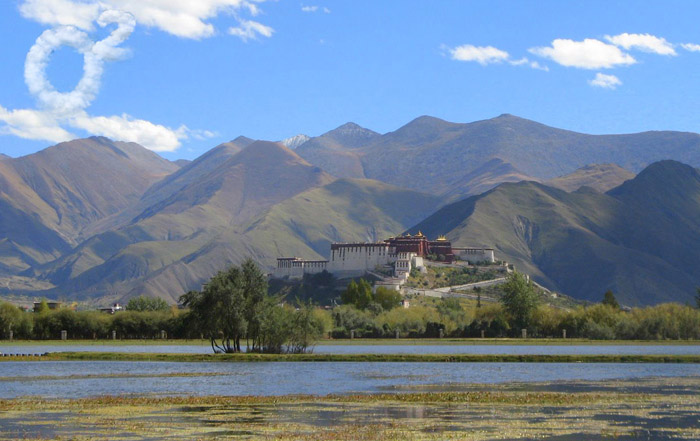
Photography Guide—Capturing Tibet’s Spring
Essential Gear for Spring Shooting
Camera bodies:
· Weather-sealed preferred (spring weather changes fast)
· Spare batteries (cold drains them quickly; keep spares in inner pockets)
Lenses :
· Wide-angle (16-35mm): For expansive valley shots, monastery interiors
· Mid-range (24-70mm): Versatile for general shooting
· Telephoto (70-200mm or longer): Essential for compressing snow mountains with blossoms, capturing candid portraits
· Prime lens (50mm or 85mm): Beautiful for portraits, low-light situations
Accessories:
· Tripod (essential for golden hour and blue hour shooting)
· Drone (with permits; check no-fly zones)
· Circular polarizer (reduces glare, saturates colors)
· Graduated ND filters (balances bright sky with darker foreground)
· Lens cleaning kit (dust is everywhere)
Location-Specific Tips
Nyingchi peach blossoms :
· Suosong Village: Position for Namcha Barwa at sunrise. The classic shot frames the peak through flowering branches with the river below.
· Bomi Valley: Drone shots reveal the scale of bloom coverage. Ground-level shooting works best along the river and in village orchards.
· Gala Village: The official festival grounds offer organized compositions. Shoot early before crowds arrive.
· Niyang River: Reflections create symmetrical compositions. Overcast days work well here.
Yamdrok Lake blue ice :
· Early morning light emphasizes ice texture
· Polarizer is essential for cutting glare
· Include foreground elements (prayer flags, rocks) for scale
· Safety first—don’t walk on unstable ice
Everest in April :
· Sunrise and sunset are prime
· Gawula Pass offers five-peak panoramas
· Rongbuk Monastery frames the mountain beautifully
· Base camp provides the closest access
Golden Hour Schedules for Spring 2026
Location Sunrise Sunset Golden Hour AM Golden Hour PM
Lhasa (March) ~7:15 AM ~7:15 PM 6:45-7:45 AM 6:15-7:15 PM
Nyingchi (April) ~6:45 AM ~7:45 PM 6:15-7:15 AM 6:45-7:45 PM
Everest (April) ~7:00 AM ~8:00 PM 6:30-7:30 AM 7:00-8:00 PM
Note: All times approximate; adjust based on exact date and location.
Composition Techniques for Spring
The classic Tibet spring shot:
Frame a snow peak through flowering peach branches. Position yourself so blossoms occupy the lower third, mountain the upper third. Use a telephoto lens to compress distance, making the mountain appear closer to the flowers.
Village life:
Include traditional architecture, farming activities, or local people to add human interest. Tibetan villages during spring planting offer authentic scenes—farmers guiding yaks, women sowing seeds, children playing.
Abstract details:
Don’t forget close-ups—single blossoms against blue sky, raindrops on petals, fallen flowers on prayer stones, bees working early blooms.
Cultural elements:
Incorporate prayer flags, mani stones, chortens (stupas), and monasteries. These elements ground your flower photos in Tibetan culture rather than generic nature photography.
Responsible Spring Travel
Environmental Considerations
Spring’s beauty comes with fragility. The plateau ecosystem recovers slowly; our impact lasts.
Leave no trace principles:
· Pack out all trash, including organic waste (it doesn’t decompose quickly at altitude)
· Stay on established trails—off-trail walking damages fragile vegetation
· Don’t pick flowers (obvious but needs saying)
· Keep distance from wildlife—spring is birthing season for many species
· Use reef-safe sunscreen (chemicals pollute water sources)
Photography ethics:
· Don’t trample crops or village gardens for the perfect shot
· Ask permission before photographing people
· Respect “no photography” signs in monasteries
· Don’t use drones near religious sites or without checking regulations
Supporting Local Communities
Your visit can benefit Tibetan communities when done thoughtfully:
Economic choices:
· Hire local guides and drivers (your tour operator should employ Tibetans)
· Buy handicrafts directly from artisans (Barkhor Street, village cooperatives)
· Eat at local restaurants, not just hotel dining rooms
· Stay in locally-owned accommodations when possible
Cultural respect:
· Learn a few Tibetan phrases (tashi delek for hello, thuk-je-che for thank you)
· Understand that not everyone wants to be photographed
· Accept offered food and drink graciously
· Dress modestly, especially at religious sites
Giving back:
· Some tour operators include community projects—ask about opportunities
· School supplies can be donated through organized channels
· Supporting local monasteries through small donations is appropriate
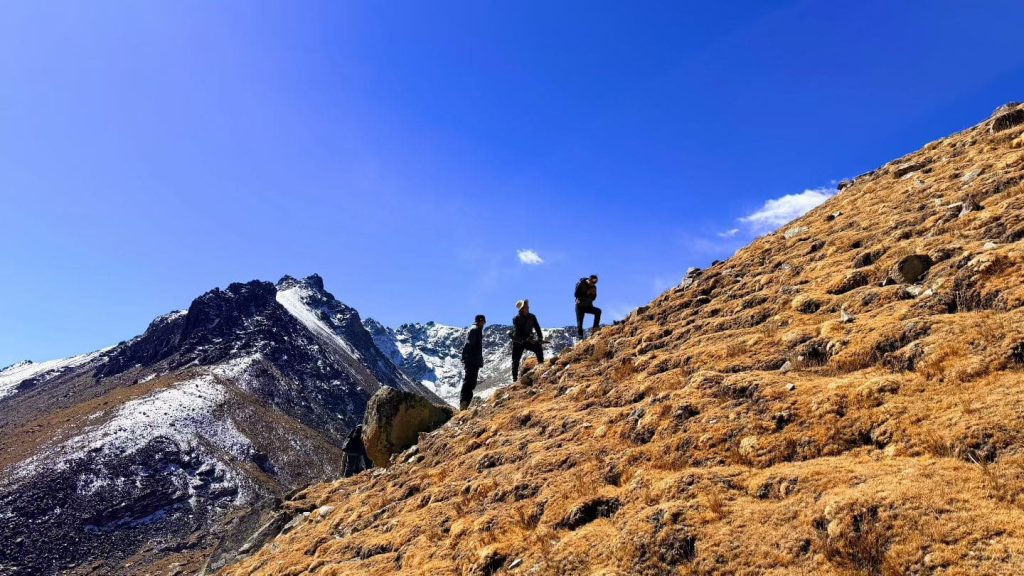
Conclusion: Your Spring Journey Awaits
Spring in Tibet defies easy description. It must be experienced—the moment when winter’s harsh beauty softens into new life, when snow mountains gaze down upon valleys exploding with color, when ancient traditions welcome a new season with prayers and celebrations that have continued for centuries.
The 2026 season promises to be exceptional. With favorable weather forecasts, improved infrastructure (including the convenient Lin-La Expressway), and a growing range of tour options from budget to luxury, there’s never been a better time to witness this extraordinary transformation.
Whether you spend a week immersed in Nyingchi’s peach blossom wonderland, push onward to Everest for Himalayan grandeur, or combine both in an epic two-week journey, Tibet’s spring will reward you with memories that outlast any photograph.
Remember to travel slowly, breathe deeply, and remain open to the unexpected—a monastery festival you hadn’t planned for, a family who invites you for butter tea, a moment of pure beauty when the sun breaks through clouds just as you’ve framed the perfect shot.
The Roof of the World is awakening. Will you be there to greet the spring?
Ready to book your 2026 Tibet spring tour? Contact licensed Tibetan operators who specialize in spring itineraries. Remember to book early—accommodations and guides fill quickly for the brief but magnificent blooming season. Your journey into the heart of Tibet’s most beautiful season begins with a single step toward the mountains.