+86-15889090408
[email protected]

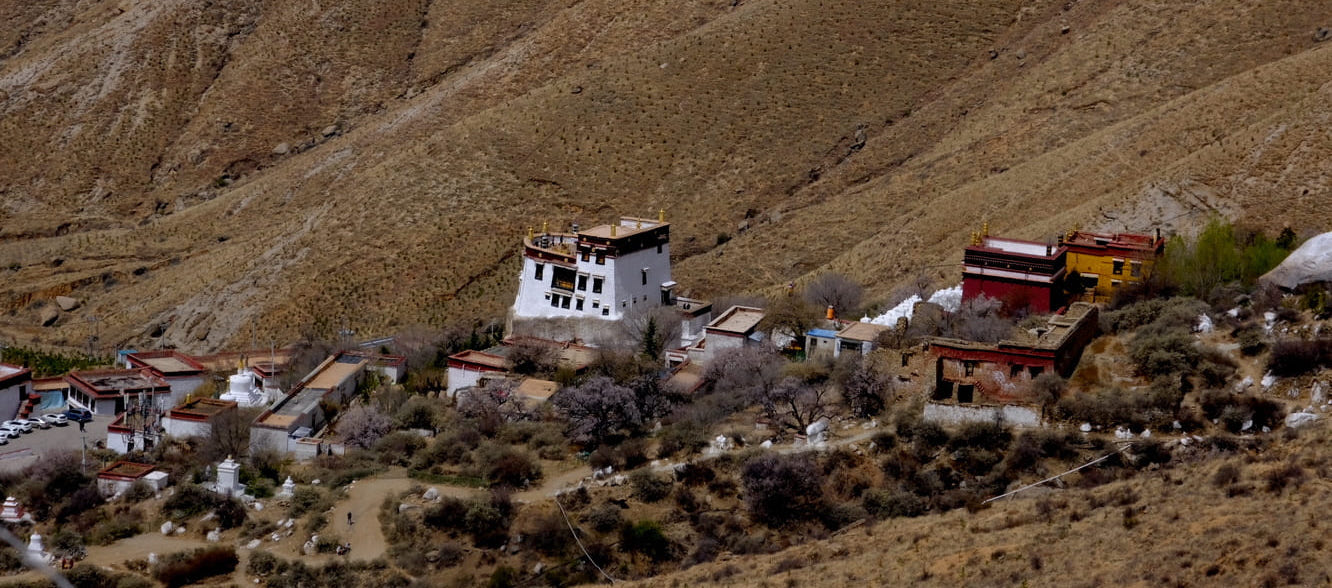
Most travelers who land in Lhasa arrive with a mental checklist. The Potala Palace, of course. The Jokhang Temple, without question. Perhaps a morning spent watching the monks debate at the sprawling Sera Monastery or Drepung. These are the titans of Tibetan tourism, the sights that fill itineraries and camera rolls. But if you have a sense of genuine adventure—the kind that craves discovery rather than a checklist—and a desire to step off the tourist treadmill entirely, there is a hidden gem located just eight kilometers northwest of the city center. It is a place that is often overlooked in the guidebooks, dismissed as “too small” or “too far” by those in a hurry.
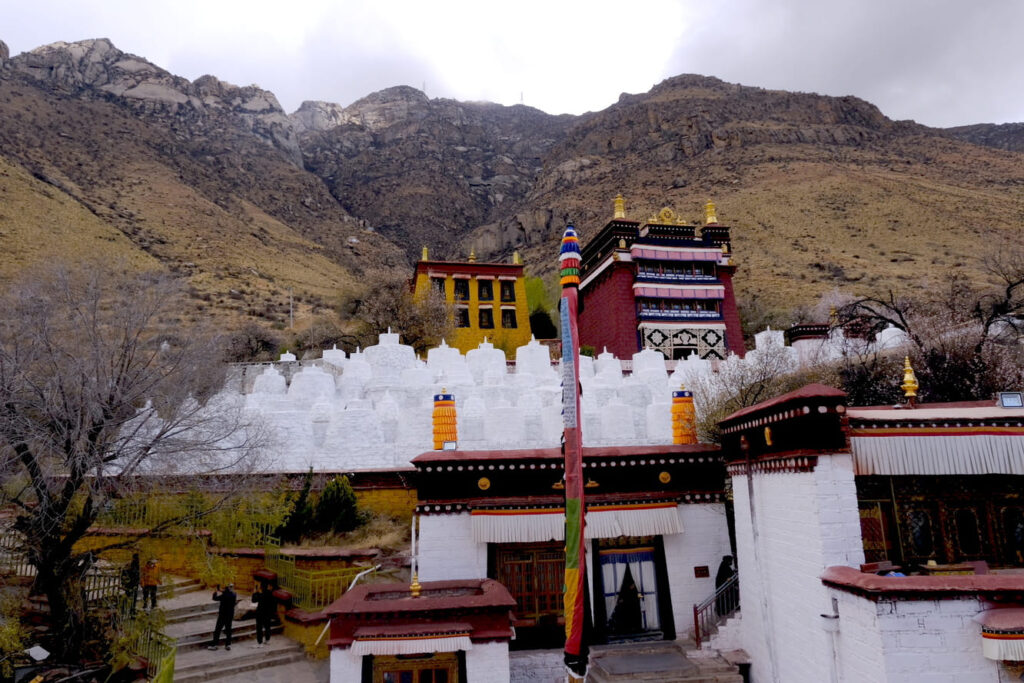
Perched dramatically on the rugged slopes of Mount Parasol in the Nyang bran Valley sits Pabonka Hermitage, a name also spelled Phapung Ka depending on the transliteration. While it lacks the jaw-dropping, postcard-perfect scale of the Potala, what it lacks in sheer physical mass, it more than compensates for in soul, mystery, and raw historical significance. This is not a museum piece polished for foreign consumption. This is a living, breathing rock that has witnessed the birth of an empire. This is the “temple on a rock” that should be your next, and perhaps most memorable, stop in the holy city of Lhasa.
The name Pabonka translates roughly to “Stone Palace,” “Half Stone,” or “Palace at the Top of the Rock.” You will understand the etymology the moment the site comes into view as your taxi labors up the final winding road. Unlike the Potala, which rises from a hill in the center of a bustling city, Pabonka feels like a secret fortress. The monastery is dominated by a striking, almost improbable three-story tower. It is perched precariously on top of a massive, twenty-meter-high granite boulder that looks as if it were hurled from heaven and stuck into the mountainside.
The hermitage complex is a maze of whitewashed walls, fluttering prayer flags, and golden roofs that catch the thin, hard light of the Tibetan plateau. From a distance, the building merges with the stone, making it look less like a human construction and more like a geological feature that happens to have windows and doors. Up close, the air is thin and cool, and the only sounds are the wind whistling through the rock crevices and the low murmur of monks chanting inside ancient walls. The location feels deliberately chosen for isolation and protection, a place where a king or a hermit could look out over the Lhasa Valley and feel far removed from the intrigues of the world below.
But the magic of Pabonka is not merely visual or atmospheric. It is deeply, profoundly historical. To stand on this rock is to stand at the very cradle of Tibetan civilization as we know it today.
Everyone knows the name Songtsen Gampo. He was the thirty-third king of the Yarlung dynasty and the unifier of the Tibetan Empire in the seventh century. He is famously credited with building the first structures of the Potala Palace and initiating the spread of Buddhism into the region. However, the guidebooks rarely mention that Songtsen Gampo built Pabonka first. Long before the Potala was a twinkle in the king’s eye, this hermitage on the hill served as his fort, his summer retreat, and most importantly, his meditation sanctuary. Historical records suggest that the original construction dates back to the year 637 CE, making Pabonka one of the oldest surviving architectural sites in the entire Lhasa region.
It is within these weathered stone walls that one of the most significant events in Tibetan cultural history took place. The story is a fascinating blend of royal decree and divine intervention. King Songtsen Gampo, realizing that Tibet needed a written script to translate Buddhist scriptures and govern a growing empire, sent his brilliant minister, Thonmi Sambhota, to India to study the art of writing. Upon his return, Thonmi retreated to Pabonka, using the silence of the hermitage to formulate a new script based on the Indian Gupta script. The result was the thirty characters and four vowel signs that became the classical Tibetan alphabet, a script that remains virtually unchanged today, some fourteen centuries later.
Visitors to Pabonka can enter a specific, unassuming chapel to witness the physical proof of this legend. Inside, preserved under glass or behind a protective grille, is a sacred stone slab. Carved into the surface of this gray rock are six syllables: Om Mani Padme Hum, the most sacred mantra in Tibetan Buddhism. It is the mantra of Chenrezig, the Buddha of Compassion.
But here is the miracle that draws pilgrims from across the plateau. Legend states that this inscription was not carved by a human hand. The mantra is said to have miraculously appeared on the rock, etching itself into the granite as a sign of divine blessing. More importantly for the historian, this specific carving is written in the very first script created by Thonmi Sambhota. Standing in that room, looking at that rock, you are standing at the birthplace of Tibetan calligraphy. For writers, linguists, and history enthusiasts, this is a profoundly moving experience. It is a rare instance where you can touch—literally touch—the genesis point of a written culture.
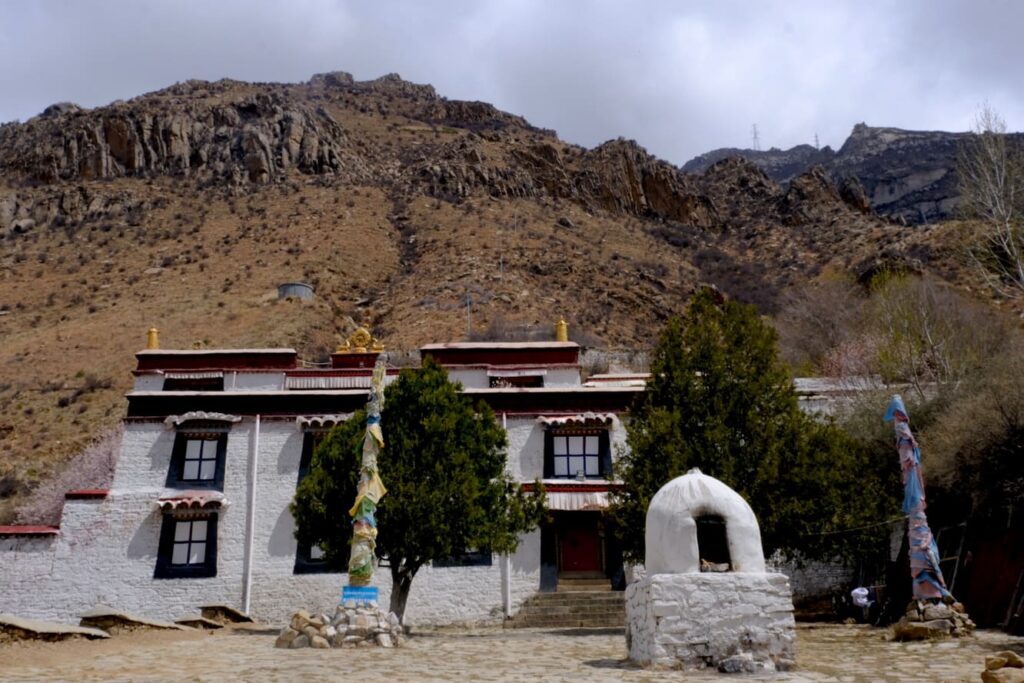
Beyond the tower and the scriptural stone, the heart of Pabonka’s spiritual power lies underground, or rather, inside the rock. The complex contains a small, dark, and deeply atmospheric cave known as the Palden Lhamo Cave. To enter this cave is to step back through layers of time. The ceiling is blackened by centuries of butter lamp smoke. The walls are slick with grease from countless offerings. The air is thick with the smell of yak butter, burning incense, and cold stone.
This small, womb-like space was originally used as a meditation retreat by King Songtsen Gampo himself. It is said that the king would sit here for hours, staring into the darkness, contemplating the dharma and the future of his kingdom. The walls of the cave still hold a natural, self-arising image of Palden Lhamo, the fierce female protector deity of Tibet, which gives the cave its name. For Tibetan Buddhists, this is not a tourist attraction but a living shrine of immense power.
Centuries later, the cave received an even more famous visitor. In the eighth century, the great tantric master Padmasambhava, known to Tibetans as Guru Rinpoche, arrived in Tibet to subdue the local spirits and establish Buddhism on the snowy plateau. He chose Pabonka as one of his retreat sites. Inside this same cave, Guru Rinpoche meditated and performed rituals, blessing the stone with his presence. According to tradition, he buried “terma,” or hidden spiritual treasures, in the rock, to be discovered by future enlightened masters.
The energy inside the Palden Lhamo Cave is palpable. It is raw, unfiltered, and entirely unlike the polished, well-lit interiors of the major cathedrals like the Jokhang. There are no velvet ropes here. You will see Tibetan pilgrims pressing their foreheads against specific stones, muttering prayers, and leaving small offerings of barley or coins. The darkness forces you to slow down, to breathe, and to feel the weight of centuries of devotion packed into a space no larger than a modest living room. It is a rare glimpse into the heart of esoteric Tibetan Buddhism, a practice often hidden from outsiders.
In the modern day, Pabonka functions as the largest and most important hermitage belonging to Sera Monastery, one of the great three Gelug university monasteries of Lhasa. It is not an independent entity but a satellite, a place of retreat for monks seeking solitude away from the busy courtyard debates of the mother house.
For the Tibetan pilgrims who walk the dusty paths around the hermitage, Pabonka is the traditional starting point of the “Sera Mountain Circumambulation Circuit,” locally known as the Ri-khor. This specific pilgrimage route is particularly popular during the “Sixth-Month Fourth-Day” festival, a time when the faithful walk the entire perimeter of the mountain, spinning prayer wheels and accumulating merit. Watching a line of elderly Tibetans in chubas (traditional sheepskin robes) shuffle past the boulders, their wooden beads clicking rhythmically, is a sight that stays with you longer than any photograph.
However, even for the casual traveler who may not understand the nuances of Buddhist pilgrimage, the geography of Pabonka offers a reward that requires no translation: the view. Because the hermitage sits high on the hillside, exposed to the elements, it offers one of the most spectacular panoramic views of the entire Lhasa Valley. From the upper balcony of the three-story tower, you can see the modern city sprawling in the haze to the south. The Lhasa River glints like a silver ribbon cutting through the urban grid. Far in the distance, the red and white mass of the Potala Palace sits on its hill like a throne.
It is a particularly spectacular spot to watch the sunrise or the sunset. In the early morning, the light turns the granite boulders a deep shade of gold and orange. The prayer flags strung between the rocks snap in the cold wind. There are no touts selling souvenirs up here, no crowds jostling for a selfie. Just you, the rock, and the vast, indifferent beauty of the Tibetan sky. It is the kind of view that makes you understand why hermits chose this spot for enlightenment.
Pabonka is also known for a feature that many tourists find unsettling, yet it is perhaps the most authentically Tibetan aspect of the site. Near the hermitage, hidden discreetly behind a ridge, lies a dokham, a sacred sky burial site. While visitors are strictly prohibited from approaching, photographing, or disturbing these funerary rites, the knowledge of their presence adds a layer of profound philosophical weight to your visit.
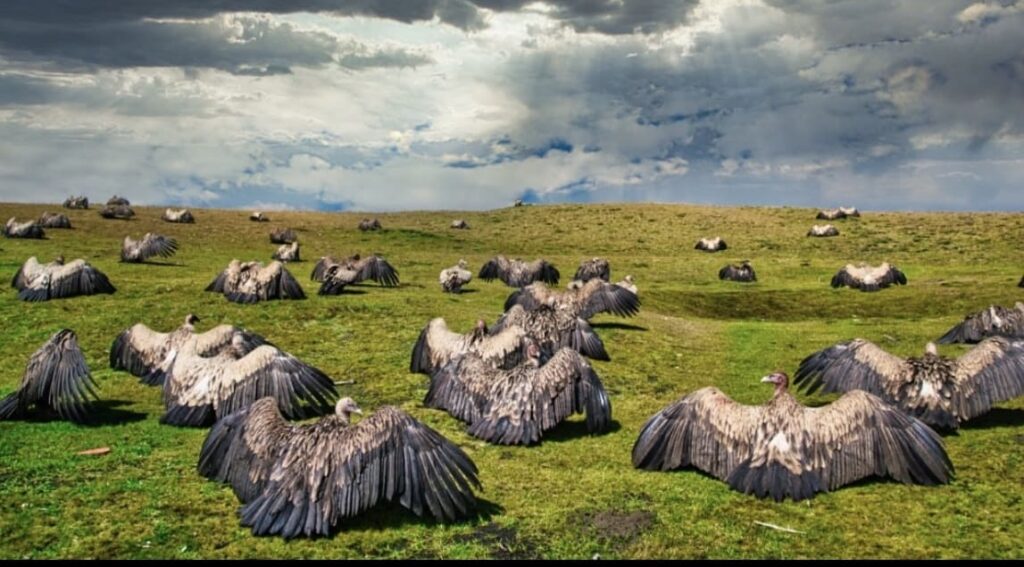
In Tibetan Buddhism, death is not an end but a transition. The tradition of offering the body to the vultures (the “Dakinis” or sky dancers) is considered the ultimate act of generosity and compassion. It is a practical solution for a land with rocky soil that is difficult to dig and a scarcity of wood for cremation. More importantly, it is a stark, physical reminder of the impermanence of life, a core tenet of Buddhism known as anicca.
Walking the trails near Pabonka, you might notice the absence of the morbid curiosity you might feel elsewhere. There is no smell, no gore visible from the paths. Instead, there is just a profound silence and a few feathers on the rocks. For the Western visitor, simply being in the vicinity of a sky burial site forces a reckoning with one’s own mortality. It strips away the sanitary, hidden nature of modern death and places it squarely in the context of nature. It is a sobering, spiritual experience that you will not find at the Potala Palace, and it is unique to the rugged hermitages like Pabonka.
Let us take a moment to walk through the physical structure itself. The main assembly hall, though small compared to Sera or Drepung, is crammed with statuary. There are images of the Buddha Shakyamuni, of course, but also fierce guardian deities with multiple arms and flaming halos, their faces twisted in wrathful scowls meant to scare away ignorance and evil spirits. The murals on the walls are faded but beautiful, painted in the traditional Tibetan style using mineral pigments.
One of the most famous statues in the complex is that of a wrathful manifestation of Manjushri, the Bodhisattva of Wisdom, known as “Rigden Ngag Wang.” The story goes that this statue actually spoke aloud once, proclaiming the teachings of the Kalachakra Tantra. Whether you believe in the literal miracle or see it as a metaphor for the power of faith, the statue is a striking piece of religious art.
The ascent to the top of the main boulder is steep. Stairs have been carved directly into the rock face, worn smooth by the feet of millions of pilgrims over thirteen centuries. At the top, there are no large halls, only small hermit cells where monks used to live in total isolation. Looking down from this height, you can see the layout of the entire valley. You can trace the ancient trade routes and irrigation channels. It is easy to imagine King Songtsen Gampo standing in this exact spot, watching his army march in the distance, feeling the weight of a kingdom on his shoulders.
If this description has convinced you to add Pabonka to your itinerary, timing is everything. While autumn offers crisp, clear air and a blue sky that hurts to look at, the true secret season for visiting Pabonka is spring, specifically late March to early April. Unlike the famous Nyingchi Peach Blossom Festival, which requires a long drive to the southeast, Pabonka has its own secret weapon. The hermitage is home to dozens of ancient, gnarled wild peach trees. Nobody planted them in rows; they grow where they wish, twisting out of the granite cracks.
When these trees bloom, the combination of the soft pink blossoms, the deep red of the monastery walls, the stark white of the boulders, and the brilliant blue of the sky is absolutely breathtaking. It is a photographer’s dream and a moment of pure, uncomplicated beauty. The contrast between the hard, permanent stone and the soft, fleeting flowers perfectly encapsulates the Buddhist teaching on impermanence.
Regarding practical logistics, the temple grounds are generally open from around 6:00 AM to 6:00 PM. If you can, try to arrive in the early afternoon, around 3:00 PM. This timing gives you a chance to wander the grounds before perhaps catching the echo of monks debating in the courtyard. While Sera is famous for its public debates, Pabonka offers a quieter, more spontaneous version.
A word on cultural etiquette: This is not a theme park. The dress code is strict. Women wearing skirts or sleeveless tops may be denied entry to the main chapels. Remove your shoes before entering any shrine, and never point your feet toward a Buddha statue. Avoid touching the murals or the statues. Do not sit with your legs stretched out toward the altar. And most importantly, do not take photographs inside the inner sanctuaries or of the sky burial area. These are acts of respect, not restrictions.
Finally, pay attention to your body. Pabonka sits at a higher elevation than Lhasa city itself. The climb up the stairs of the main boulder, though short, can be surprisingly exhausting. Take it slow. Bring water. Sit in the shade of the peach trees for ten minutes. Acclimatization is not just a medical necessity; it is a spiritual practice. You cannot rush the mountains, and you cannot rush Pabonka.
Pabonka is not for the traveler in a hurry. It is not for the person who wants to check a box and buy a souvenir. It is a quiet, demanding, and ultimately rewarding place. It is a living museum where the walls are not glass cases but rough-hewn stone. It is a place where you can touch the rocks carved by the hand of a king’s minister thirteen hundred years ago. It is a place where you can sit in a cave where the founder of Tibetan Buddhism once sat, breathing the same thin air.
When you are in Lhasa, it is easy to look up at the Potala Palace and feel awe. It is a magnificent building. But if you want to feel the history of Tibet—the messy, miraculous, gritty birth of a culture—you must go beyond the obvious. You must drive the eight kilometers to the northwest. You must climb the stone stairs. You must look out over the valley from the “Palace of Stone.”
The best stories are rarely found on the main stage. They are hidden in the wings, written on the rocks. Pabonka Hermitage is one of those stories waiting for you to discover it.