+86-15889090408
[email protected]

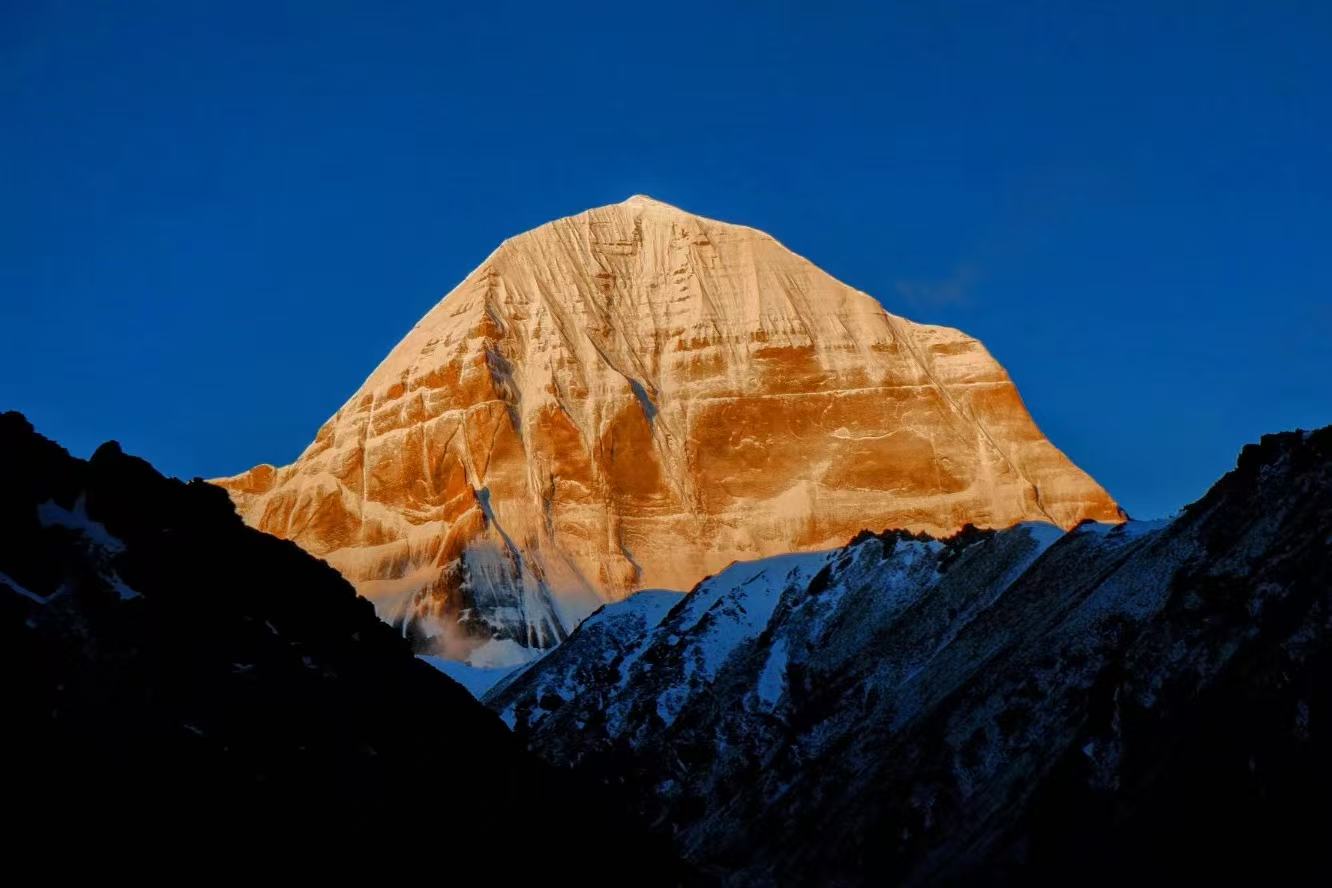
Few places on Earth command the silent reverence, mystical intrigue, and geological wonder of Mount Kailash. Rising 6,638 meters (21,778 feet) in the remote southwestern corner of Tibet, this peak is not the tallest in the Himalayas—but it is arguably the most sacred. Unlike Everest, which beckons climbers to conquer it, Mount Kailash repels human ambition. No one has ever stood on its summit, and according to ancient lore, no one ever will.
For travelers, pilgrims, and spiritual seekers, Mount Kailash represents the ultimate journey. It is a place where the physical act of walking becomes a meditation, where the air is thin enough to blur the line between life and death, and where four major world religions find their mythical origin.
In this comprehensive guide, we will explore the profound religious significance of Mount Kailash, the grueling 52-kilometer circumambulation known as the Parikrama, the enigmatic Lake Mansarovar, and essential travel logistics for 2026.
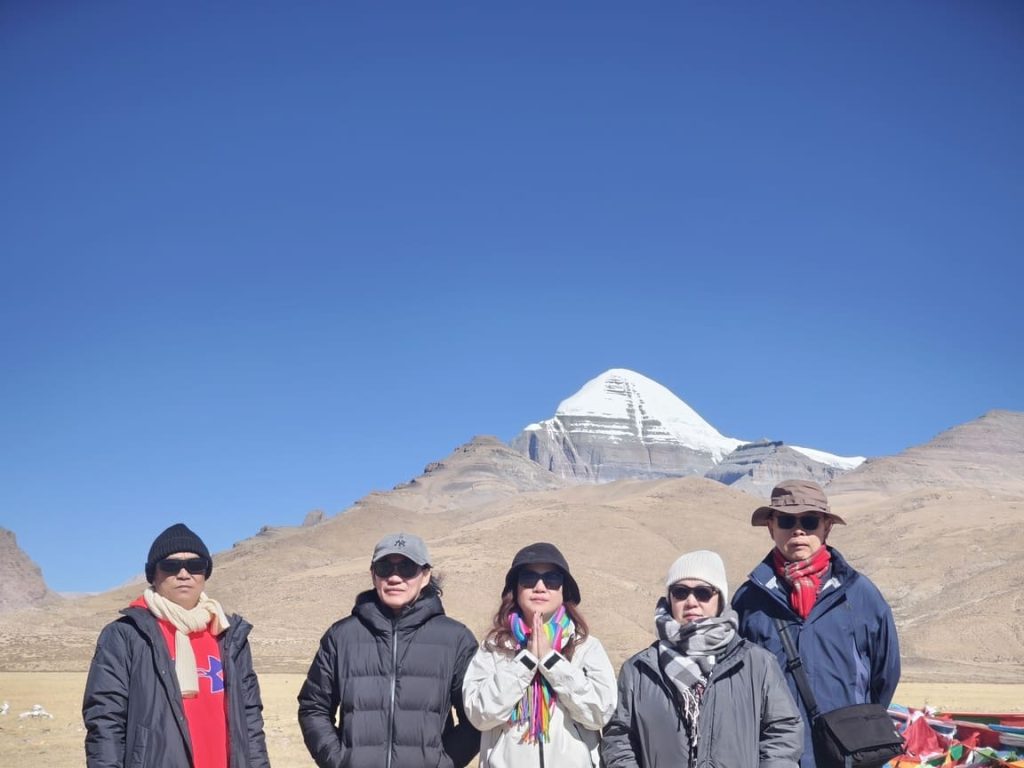
Before diving into logistics, one must address the elephant in the room: Why is the world’s most revered peak untouched?
Mount Kailash is considered the earthly manifestation of Mount Meru—the cosmic axis of the universe. For Hindus, it is the home of Lord Shiva. For Buddhists, it is the abode of Demchok, a wrathful manifestation of Buddha. Jains call it Ashtapada, where their first Tirthankara, Rishabhanatha, attained liberation. Followers of Bon, Tibet’s pre-Buddhist religion, believe it is the seat of the sky goddess Sipaimen.
To set foot on the summit is an act of supreme sacrilege. In 2001, a Spanish team obtained a climbing permit, but international outcry and a plea from the Chinese government forced them to cancel. Today, climbing Mount Kailash is strictly forbidden by Chinese law.
Even if it were legal, climbers doubt it is possible. Reports from the few who have attempted the lower ridges speak of bizarre phenomena: accelerated aging, rapid nail and hair growth, and a disorienting loss of willpower. Some believe the mountain is a “Stargate” or a pyramid complex linked to an ancient energy grid.
Regardless of the reason, Mount Kailash remains the world’s most revered unclimbed peak.
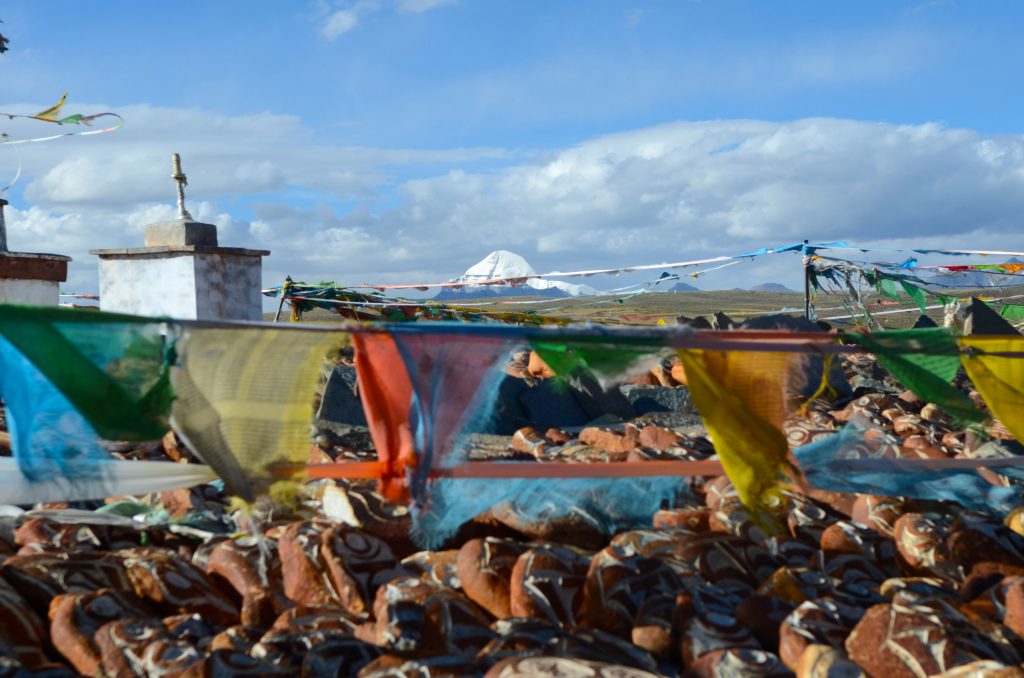
The Kailash Mansarovar Yatra is not a vacation; it is an ordeal of faith. Every year, thousands of pilgrims endure high-altitude sickness, sub-zero temperatures, and rough terrain to complete the circuit.
The Yatra typically starts from Kathmandu in Nepal or Lhasa in Tibet. The Tibetan route via Darchen, the base camp town, is the most common. From Lhasa, it is a four-day drive across the Tibetan plateau, crossing passes like Mayum La at 5,200 meters before descending into the holy valley.
The season is brutally short. Due to snow and extreme cold, the Yatra operates only from May to September.
There are several important stops along the way. Yam Drok Lake, sitting at 4,441 meters, is a turquoise lake sacred in its own right. Palcho Monastery is a unique monastery combining Tibetan, Han, and Nepalese architecture. Finally, Lake Mansarovar at 4,590 meters is the highest freshwater lake in the world.
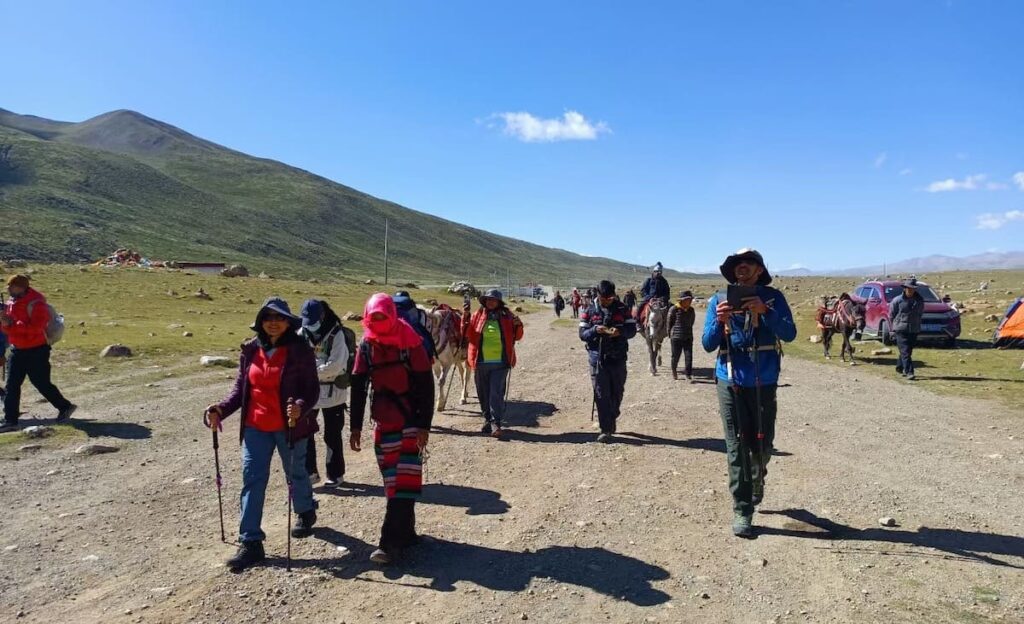
The heart of the Mount Kailash experience is the Kora, or circumambulation. Hindus and Buddhists walk clockwise while Bon followers walk counterclockwise. It takes three days for the average pilgrim, though fit trekkers can complete it in two.
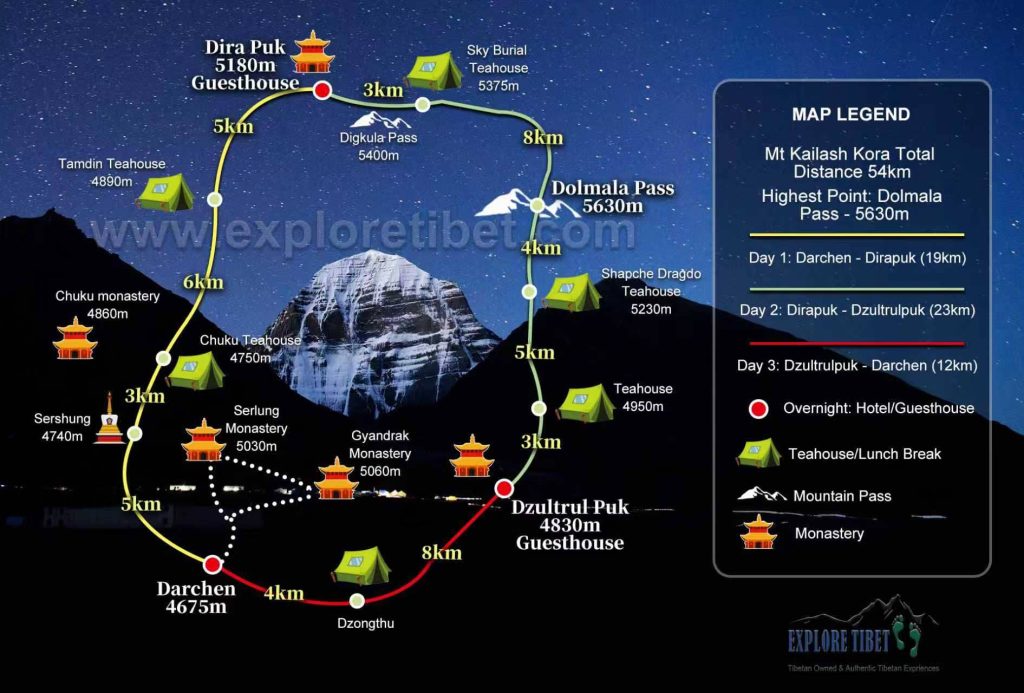
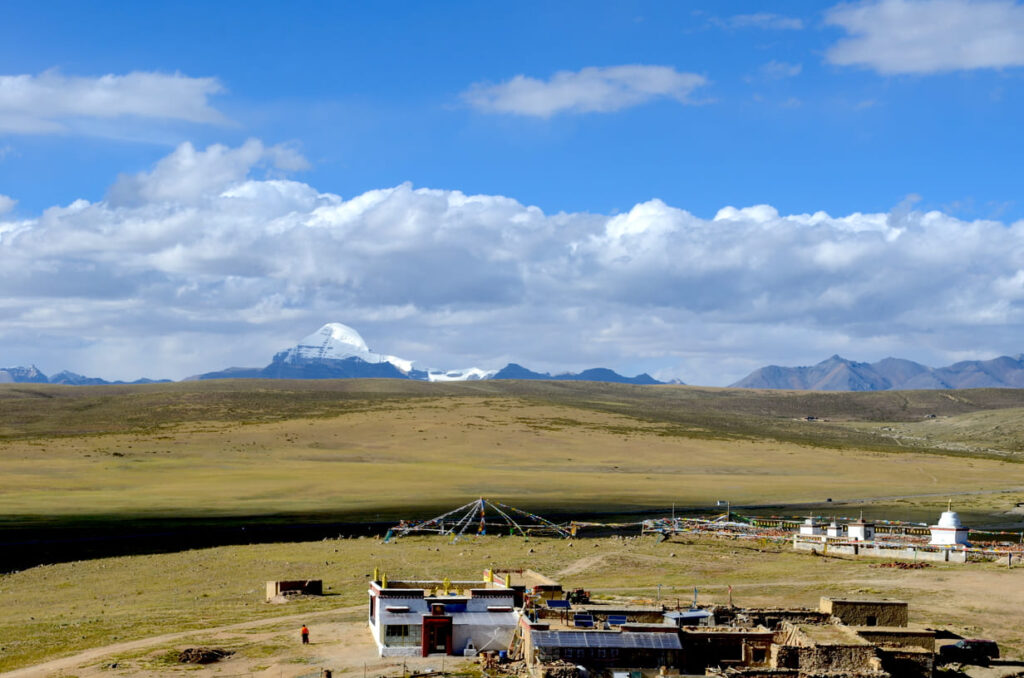
Starting at Darchen, which sits at 4,675 meters, the trail is gentle. You walk along the western face of Mount Kailash, with the peak towering above you like a white pyramid. The destination is the Dirapuk Monastery at 4,900 meters, which offers the best south-face view of the mountain. At night, the stars look close enough to touch.
This is the “death zone.” You ascend to the Dolma La Pass, which rises to 5,636 meters or 18,490 feet. The climb is a relentless switchback of loose scree. At the top, pilgrims leave behind clothes, hair, or even blood by pricking a finger to symbolize the death of the ego.
Just below the pass is Gauri Kund, also known as the Lake of Compassion. This is a small, frozen green lake. Legend says that Shiva’s consort, Parvati, bathed here. You should not touch the water, as it is considered highly sacred and dangerous.
The descent is equally punishing on the knees, leading to the Zuthulpuk Monastery at 4,790 meters. This monastery is called the “Cave of Miracles” because the Buddhist saint Milarepa meditated there.
The final day is a flat, dusty walk back to civilization. By now, your feet are bruised, but your spirit is light.
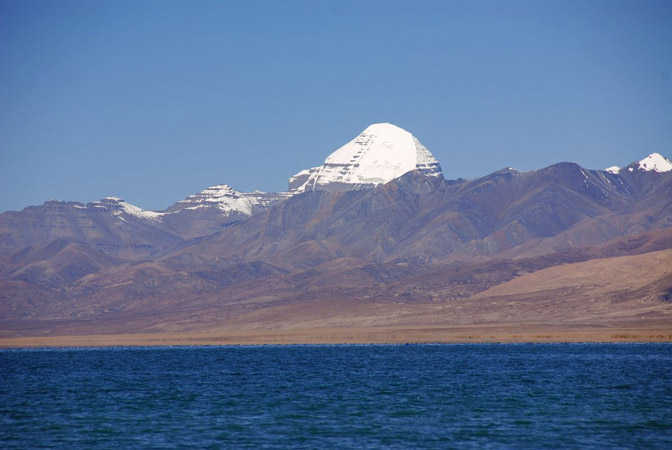
No Mount Kailash tour is complete without Lake Mansarovar. Located just 30 kilometers southwest of the peak, this oval-shaped lake is a geological marvel.
The lake covers 320 square kilometers. Its water is so pure that you can see the bottom at a depth of ten meters. The most photogenic spot is Chiu Gompa, a small monastery clinging to a rock.
Despite the water being near freezing, typically around six degrees Celsius, pilgrims bathe in Lake Mansarovar to wash away the sins of a hundred lifetimes. Nearby is Rakshas Tal, known as the Lake of the Demon, which is salty and devoid of life. Interestingly, despite being adjacent, the two lakes have different water densities, and no visible channel connects them. One is sweet, and the other is salty, a mystery that has baffled geologists for decades.
To rank for SEO and capture featured snippets, here are bite-sized facts about this sacred peak.
First, Mount Kailash is the hydrological hub of Asia. The Indus, Sutlej, Brahmaputra, and Karnali rivers all originate here.
Second, at sunset, the mountain casts a shadow shaped like a Swastika, which is an ancient symbol of well-being.
Third, despite over sixty expeditions to Everest in a single season, Kailash has zero summits.
Fourth, the south face has a vertical crack that resembles a Swastika or a cross, while the west face looks like a Buddhist Mandala.
Fifth, legend says that Milarepa, the Buddhist saint, flew up the mountain while Naro Bonchung, a Bon follower, flew up with a drum. Milarepa won, throwing Naro into the valley below.
Sixth, satellite images suggest that the snow accumulation on the mountain’s flanks forms the Tibetan character for “OM.”
Seventh, some trekkers report that GPS devices go haywire near the summit, displaying erratic readings.
Eighth, the average age of pilgrims is forty-five years, and people over seventy have completed the Kora.
Ninth, there is a secret route called the Inner Kora, a much harder three-day route that passes through the south face. It is reserved exclusively for advanced practitioners.
Tenth, in the Tibetan zodiac, a single Kora during the Horse Year equals thirteen regular Koras. The next Horse Year is 2026, which is the year this guide is written for.
Eleventh, the mountain stands in a remote corner of Tibet, far from any major city or airport.
Twelfth, the temperature at Dolma La Pass can drop to minus twenty degrees Celsius even in summer.
Thirteenth, local guides believe that walking the Kora in less than three days brings bad luck.
Fourteenth, the mountain has never been photographed from its true summit because no human has ever been there.
Fifteenth, some Russian researchers claim the mountain is a hollow pyramid, though mainstream geologists disagree.
Traveling to Mount Kailash requires navigating Chinese bureaucracy. You cannot go independently. You must join an organized group tour.
You will need a Chinese Group Visa, which requires a Tibet Travel Permit, an Alien’s Travel Permit, and a Military Permit. The cost for a twelve to fifteen-day tour typically ranges from 1,500 to 3,000 US dollars, excluding international flights.
This is non-negotiable. The Dolma La Pass is higher than the Everest Base Camp. You need the ability to walk for eight hours with a five-kilogram daypack. You also require pre-acclimatization in Lhasa for at least three days. Many trekkers bring Diamox, also known as Acetazolamide, to prevent altitude sickness.
Lhasa sits at 3,650 meters, which presents a low danger level. Darchen is at 4,675 meters, offering a moderate risk. Dirapuk Monastery is at 4,900 meters, which is considered high risk. The Dolma La Pass reaches 5,636 meters, which is a severe and critical danger zone for altitude sickness.
For clothing, you need a layered system including thermal underwear, a fleece, a down jacket, and a waterproof shell. For footwear, bring well-broken-in trekking boots with strong ankle support. For gear, you must have sunglasses because UV rays are blinding at altitude, plus sunscreen with SPF 50 or higher, lip balm, and trekking poles, which are essential for the pass. For medicine, pack a first aid kit, Diamox, Ibuprofen, and diarrhea tablets.
Many travelers ask whether the Mount Kailash Kora is harder than the Everest Base Camp trek.
The maximum altitude on the Kailash Kora is 5,636 meters, while Everest Base Camp on the Tibetan side reaches only 5,200 meters. The Kailash Kora takes three days to cover 52 kilometers, whereas the Everest Base Camp takes eight days to cover 130 kilometers. The terrain on Kailash is loose scree and boulders, while Everest involves glacier and moraine walking. Accommodation on Kailash is very basic, consisting of monasteries or tents, while Everest offers teahouses. The climbing risk on Kailash is low because no ropes are needed, while Everest has a moderate risk from ice falls.
The verdict is that Kailash is shorter but much sharper due to the rapid altitude gain on the second day.
Russian researchers in the late 1990s claimed that Mount Kailash is actually a hollow, man-made pyramid, part of a complex of one hundred smaller pyramids. They theorized that it aligns with the Egyptian pyramids and Stonehenge. Mainstream geologists dismiss this as a natural syncline fold, but the theory persists online and attracts many visitors each year.
Visitors often report that twelve hours at Dolma La Pass feels like two weeks. A Russian doctor on the 2004 expedition noted that physical changes, such as nail growth, accelerated dramatically. Skeptics say this is simply hypoxia, or lack of oxygen to the body’s tissues. Believers say it is evidence of a “time vortex” surrounding the mountain.
Whether by coincidence or design, twice a year at the equinox, the sun casts a shadow from the mountain’s ridges that perfectly forms the ancient Swastika symbol, representing eternal law and good fortune.
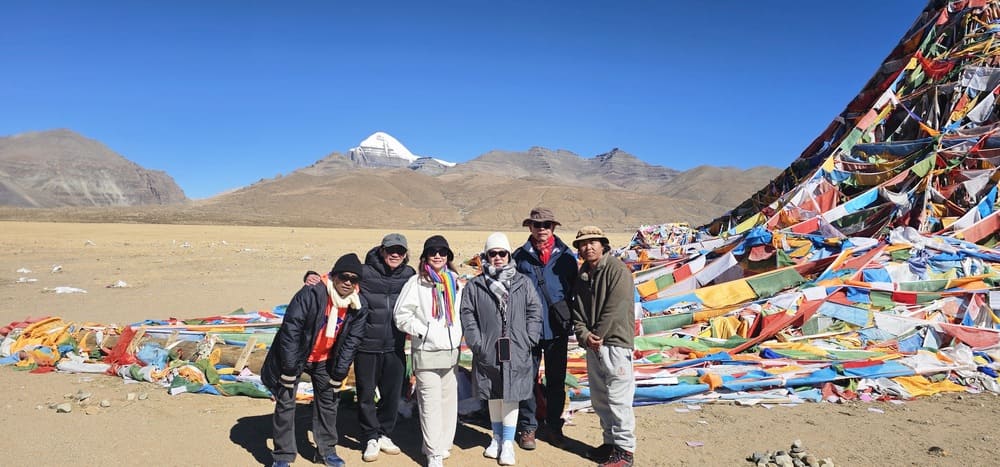
For Hindus, completing the Kailash Kora and bathing in Lake Mansarovar guarantees Moksha, which is liberation from the cycle of rebirth. For Buddhists, it clears the sins of a lifetime.
But even for the agnostic traveler, the benefits are tangible. First, you gain mental resilience. Surviving Dolma La Pass changes your perception of struggle forever. Second, you experience a complete digital detox. There is no internet, no electricity, and no noise. Only wind and stone. Third, you gain perspective. Standing at 5,600 meters, looking down at the roof of the world, your daily problems dissolve into insignificance.
Mount Kailash is not a mountain to be conquered. It is a mountain to be witnessed. It asks for nothing but your footsteps and your humility. Whether you are a devout Hindu seeking liberation, a Buddhist earning merit, or a trekker ticking off the world’s greatest hikes, the journey to Mount Kailash is a rite of passage.
As you walk the final fourteen kilometers back to Darchen, your lungs burning and your heart full, you will understand the ancient Tibetan saying: “You do not climb Kailash. Kailash climbs you.”
If you are planning the Kailash Mansarovar Yatra in 2026, which is the sacred Horse Year, start training today. The mountain is waiting.
Can you climb Mount Kailash?
No. Climbing Mount Kailash has been strictly forbidden by the Chinese government since 2001 due to its religious significance to Hindus, Buddhists, Jains, and Bon followers.
How difficult is the Mount Kailash trek?
It is extremely difficult. The trek reaches 5,636 meters at Dolma La Pass. Most pilgrims require three days to complete the 52-kilometer circuit, and altitude sickness is a major risk.
What is the best time to visit Mount Kailash?
The best time is between May and September. July and August are the warmest, but May and September offer clearer skies, although nights are much colder.
How much does the Kailash Yatra cost?
A standard fifteen-day tour from Kathmandu or Lhasa costs between 1,800 and 3,500 US dollars, depending on the service level, such as luxury versus budget truck travel.
Is Lake Mansarovar fresh or salt water?
Lake Mansarovar is a freshwater lake. It is one of the highest freshwater lakes in the world. The adjacent Rakshas Tal is saltwater.